Can You Name an Agent for Every Polling Stream in Your Ward? Prove It.
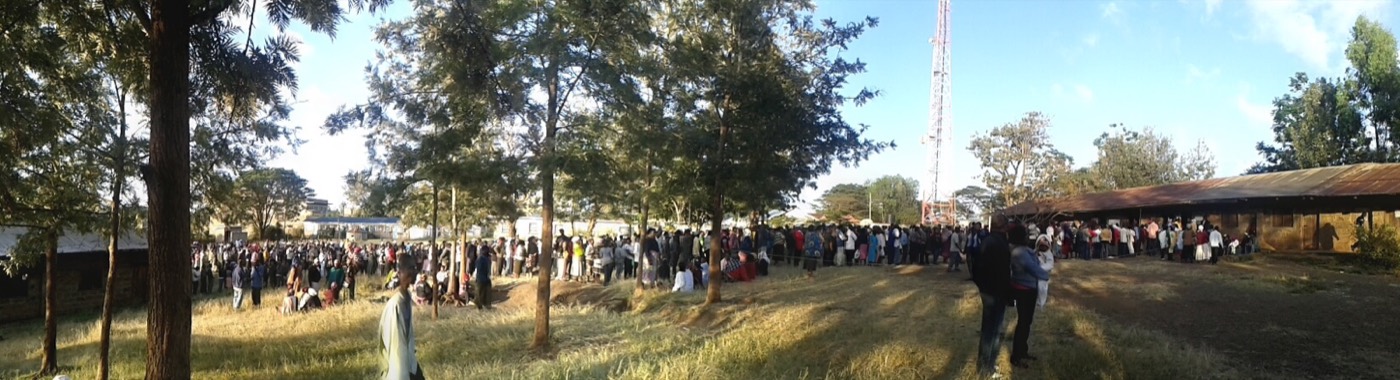
Ask any Kenyan campaign whether it will have agents at every polling station and the answer is yes.
Ask it to produce the list — every stream in the ward, the named agent, their ID number, their phone number, confirmed — and you will get a pause.
That pause is the most reliable predictor of how a campaign's election night will go.
The number you actually need
Not stations. Streams.
A polling station with 1,400 registered voters is split into streams, each with its own queue, its own count and its own set of six result forms. An agent covers a stream, not a building. A campaign that has recruited "one agent per station" in a dense ward has covered perhaps half its counts.
The IEBC's own kit numbers for 2027 give the national scale: 55,393 kits for polling stations, out of 59,352 including training units. That is the size of the country a national party is claiming to cover.
For a ward, the number is small enough to write on one page and specific enough that not having it is inexcusable.
Get the list, then find the holes
Step one: enumerate. Every polling station in your ward, with its number of streams. This is public information from the IEBC. Put it in one place.
Step two: assign. A named person against every stream. Name, ID number, phone number, and which stream.
Step three: look at what is left. The uncovered streams are your actual problem, and they are invisible unless somebody is looking at the list as a list. A campaign that tracks "we have recruited 84 agents" does not know whether those 84 cover 84 different streams or whether four streams have three agents each and eleven have none.
This is why BallotWinners shows the empty streams rather than the recruited total: an agent named for every stream, and the empty ones listed, for the coordinator who has to fill them. The total is a vanity number. The gap is the operational one.
The three ways coverage silently fails
Duplication. Enthusiastic wards over-recruit and quiet wards get nothing, because nobody is looking at the distribution.
Attrition. Between recruitment and polling day, people move, take jobs, fall ill or change their minds. A list confirmed in March and not re-checked in July is not a list, it is a memory. Confirm twice.
Ghosts. Names on a list that were never real — recruited by a coordinator who was measured on how many names they submitted. If nobody has phoned the person, they are not an agent. Call every one.
Why the uncovered streams cost you more than you think
Three separate costs, and campaigns usually only count the first.
You cannot challenge what you did not see. A result from an uncovered stream is a number you have to accept. If it is wrong, you have no basis to say so.
You have no independent tally. Your own total is only as complete as your coverage. A campaign covering 70 per cent of streams does not know its own result.
You are inviting the problem. A stream that is known to have no agent from any competitive campaign is the cheapest place in the ward for something to go wrong. Coverage is deterrence before it is observation.
Start now, and here is the arithmetic for why
Suppose your ward has 30 streams. Recruiting 30 reliable people over the next ten months means three a month. That is trivial.
Recruiting 30 in the last three weeks of July 2027 means competing with every other campaign in the constituency for the same pool, at the moment the market rate peaks, and accepting whoever is left. Those are the agents who do not turn up, or who turn up and leave at four.
The work is identical. Only the timing differs, and the timing decides whether you get the good ones.
Related: recruiting agents eleven months out and keeping them safe on the day.
Frequently Asked Questions
What is a polling stream in a Kenyan election?
A subdivision of a polling station with its own queue, its own count and its own set of six result forms. Larger stations have several streams, and a polling agent covers one stream rather than a whole station.
How many polling stations will Kenya have in 2027?
IEBC kit requirements point to roughly 55,393 polling stations, with 59,352 KIEMS kits needed in total including 3,959 for training.
How many polling agents does a campaign need?
One per polling stream, not one per station. A campaign should enumerate every stream in its area, assign a named person with an ID and phone number to each, and track the streams still uncovered rather than the total recruited.