Form 38A's Rejected-Ballot Number Is the One Nobody Reads
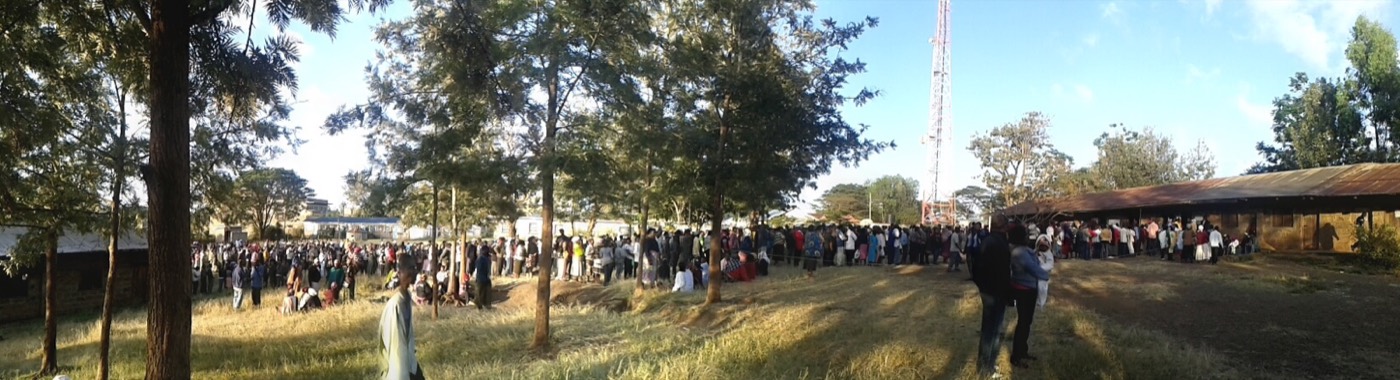
On 10 August 2027 a Kenyan voter will be handed six ballot papers at once.
President. Governor. Senator. County Woman Representative. Member of Parliament. Member of County Assembly.
Most people arrive with a firm view on two or three of them. By the fourth paper, in a queue, in a booth the size of a phone box, a number of voters stop being careful. Some leave a paper blank. Some mark it in a way that gets rejected. Some mark two boxes.
Those are real votes, and they are printed on the result form.
Where the number is
Every Form 38A — the senate result form completed at each polling stream — records the rejected ballots for that count. So does every 39A for woman representative, 34A for president, and the rest.
That figure is the most under-used piece of information in Kenyan elections.
What it tells a campaign
Which stations have a problem. Rejection rates are not uniform. A station where 4 per cent of senate ballots are rejected and a neighbouring one where the figure is 0.8 per cent are telling you something about queue management, ballot design comprehension, or how well voters there understood what the senate paper was for.
Whether your voters are dropping off. If your presidential candidate polls strongly at a station and the senate ballot there shows high rejection, voters who came out for the top of your ticket are not completing the paper you needed.
Where voter education would actually pay. Not "voter education" as a slogan — a specific instruction, in specific stations, about a specific paper.
Why the senate and woman rep papers suffer most
Because they are the seats voters understand least.
Everybody knows what a president does. Most people know what an MCA is for, because an MCA is the person they call about the drainage. The senate and the county woman representative sit in the middle: county-wide, less visible locally, and less covered nationally.
A senate campaign that does not explain what a senator does is a senate campaign relying on the voter to already know, and the rejected-ballot figures say that a proportion of them do not.
What to do with it, concretely
Before the election: get the 2022 figures for your county's stations if you can, and treat the worst ones as targets. In those wards, your canvassing script should include one sentence about the senate paper and one about what a senator does. One sentence. Not a lecture.
On the day: train agents to record the rejected-ballot figure explicitly, not just the candidate totals. It is on the form; it is a number they can read.
After: compare. If the rejection rate in your strong wards was double your weak ones, you lost votes to the ballot rather than to an opponent, and that is fixable next time.
Why this requires a system rather than a notebook
Because the value is entirely in the comparison across hundreds of stations, and no human is doing that from photographs in a group chat at 1am.
This is exactly what we built the senate view around: the rejected-ballot figure read off every Form 38A your agents send, so you can see which stations it happens in — alongside turnout at each station taken from the forms rather than from rumour, and an agent named for every stream with the empty ones listed.
The bigger point about the six-ballot structure
Kenya asks its voters to make six decisions in one visit, and campaigns behave as though only one of them is happening.
A ticket that runs six separate campaigns, each pretending to be the only thing on the paper, produces exactly this outcome: voters who turn out for one seat and give up on the others. A ticket that treats the six papers as one conversation at the door does not.
That is the argument for running them together, which is what six ballots, one platform is about.
Frequently Asked Questions
What is Form 38A in Kenyan elections?
The senate election result form completed at each polling stream. Like the other stream-level forms, it records the votes for each candidate and the number of rejected ballots for that count.
Why are senate ballots more likely to be rejected in Kenya?
Voters receive six ballot papers at once and understanding drops off after the seats they know best. The senate and county woman representative races are county-wide and less locally visible, so more voters leave those papers blank or mark them incorrectly.
How can a campaign use rejected-ballot data?
By comparing rejection rates across polling stations to identify where voters are dropping off, targeting canvassing scripts in those wards with a short explanation of the seat, and training agents to record the rejected figure from the form on election day.