How a Campaign Manager Reads the Voter Register
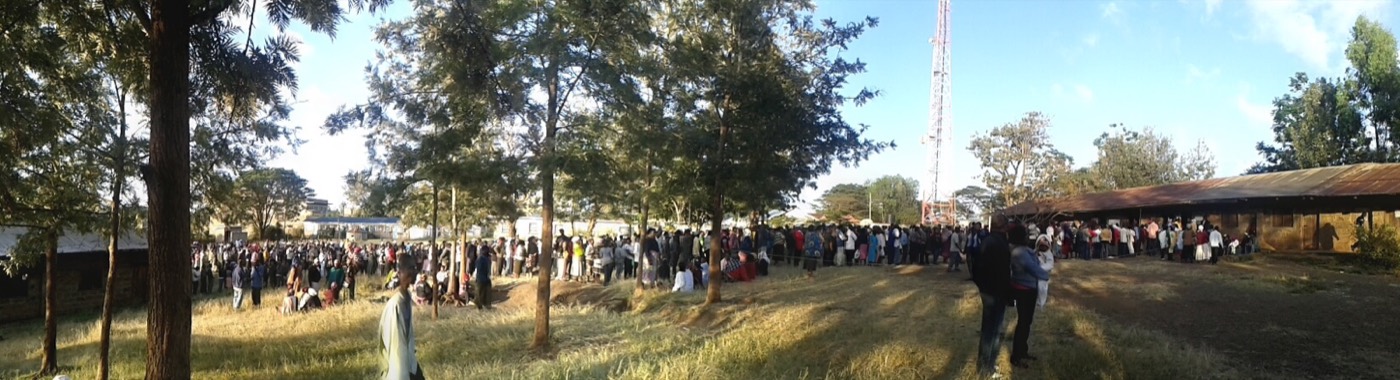
The voter register is not a list of names. It is the denominator of every decision your campaign will make between now and 10 August 2027.
Most candidates open it once, note the ward total, and close it again. That is the whole mistake.
What the register contains, and what it does not
The register tells you one thing precisely: how many people are entitled to vote, and which polling station each of them is assigned to.
It does not tell you who they will vote for. It does not tell you whether they will turn up. It carries no phone number you can call and no indication of sympathy. If somebody offers you a register that does have those columns, ask where it came from before you touch it.
What the register gives you is geography. On polling day your electorate is not spread evenly across the ward. It is standing in a specific set of queues, at a specific set of stations, in known quantities. The register is the map of those queues, published before the day.
Read it by polling station, never by ward
A ward total is a number you can do nothing with.
Break it into stations and the same data becomes instructions. One station holds a large share of the ward and sits ten minutes from the main road. Another holds a small share and takes an hour to reach in the rain. Those two stations need different plans, different numbers of volunteers and different amounts of your own time. The ward total conceals both.
Kenya has 1,450 wards, and every one of them is a collection of polling stations rather than a single block of voters. The IEBC publishes the station list. Your job is to turn it into rows.
Related: why the station is the right unit.
The four columns every campaign should build
Open a sheet. One row per polling station in your area. Then four columns.
Registered voters. Straight from the register.
Votes cast at that station at the last general election. From the published results for your seat. This is the turnout column, and it is the one most campaigns skip.
Your canvass contacts. How many people at that station you have actually spoken to and recorded.
Your identified supporters. Of those contacts, how many said yes.
Four columns, one row per station. That sheet is a campaign plan in a way no strategy document is, because every number in it is either true or visibly missing.
A worked example, with numbers chosen to be easy
Suppose a ward has 8,000 registered voters spread across ten polling stations, and suppose four people are running for the MCA seat. These are invented round figures, not measurements from anywhere real.
If roughly six in ten registered voters turn out, about 4,800 ballots are cast. Split four ways with no clear leader, the winning number sits somewhere near 1,300. Split two ways, it sits near 2,400.
Now put that against your rows. If three of your ten stations hold 3,000 registered voters between them, those three stations contain most of the votes you need. A campaign that spends equal time at all ten has decided, without noticing, that the smallest station deserves the same treatment as the largest.
The arithmetic is primary school. The discipline is doing it before you plan the diary rather than after the loss.
Who the register misses, and what it cannot tell you
Compare registered voters at a station against the adult population you can see around it. Where the gap is wide, you are looking at either a genuinely young or transient population, or a registration failure.
That distinction is worth going to look at in person, because one of them is a fixed constraint and the other is an opportunity that closes on a date the IEBC sets. Registration is the only campaign activity that changes the denominator instead of competing over it.
Related: how a registration drive is actually run.
Be honest about the rest of it. The register is a snapshot. People move, people die, people register somewhere else, and the roll is cleaned on a timetable that is not yours. A station total you note in 2026 is a guide to 2027, not a promise.
It also flattens people into an address. Two stations with identical totals can behave completely differently, and nothing in the register will tell you which is which. Only your own canvass does that.
So treat the register as the skeleton and your canvass as the flesh. The register says where the votes are. The canvass says which of them are yours. Campaigns that have one and not the other lose in a way that looks mysterious afterwards.
Do this in the next seven days
Get the station-level register for every station in your ward or constituency. Build the four columns. Sort the sheet by registered voters, largest first.
Then look at the top three rows and ask yourself when you were last there.
Frequently Asked Questions
What information is actually on the Kenyan voter register?
The register records who is entitled to vote and which polling station each voter is assigned to. It does not record political preference, willingness to turn out, or contact details. Anything you are shown that claims to include those columns did not come from the register, and you should establish where it did come from before using it.
Why should a campaign read the register by polling station rather than by ward?
A ward total cannot be acted on, because it hides where inside the ward the voters are. Station rows tell you which places hold most of your electorate, which are hard to reach, and where your volunteers and your own time should go. The ward figure is simply the sum of those rows.
What should a campaign put next to the register?
Three more columns: votes cast at that station at the last general election, the number of people your canvassers have recorded speaking to there, and how many of those said they support you. Registered voters plus those three columns is enough to plan an entire ground campaign without any specialist software.