A New Party Has Won Its First Seat. What Happens Next Is Harder.
A new Kenyan party has just won a parliamentary by-election in its heartland by better than six to one.
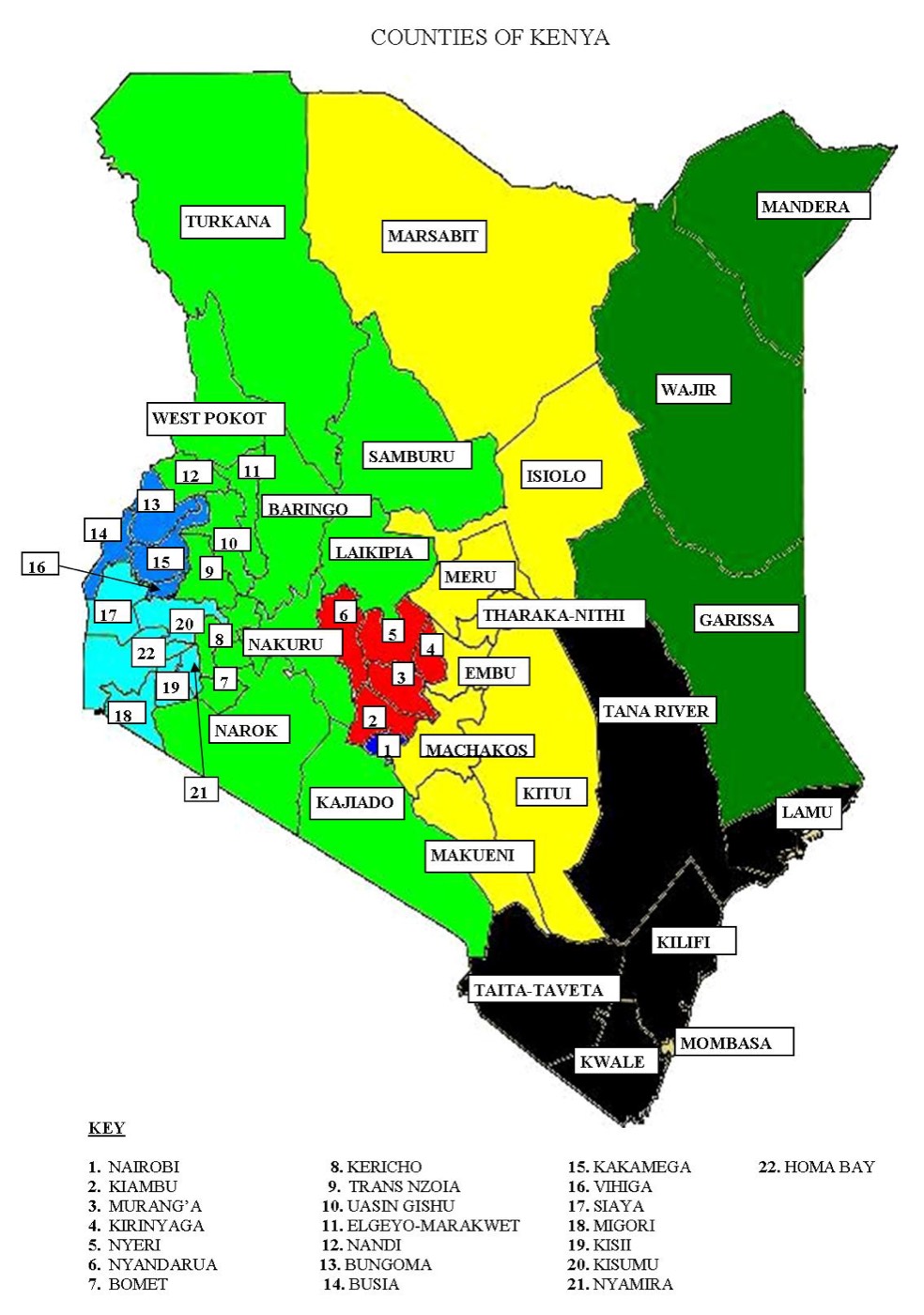
That proves it can mobilise in one constituency. The plan it has announced — candidates for all 47 governorships, all 47 Senate seats, all 290 constituencies and every ward — is a different order of problem, and it is worth setting out honestly, because it applies to every new party in Kenya, not just this one.
The scale, in numbers
Kenya has roughly 1,450 wards, 290 constituencies and 47 counties. Add Senate and county woman representative races and a party contesting everywhere needs in the order of 1,880 candidates.
Each of them must be a party member on a certified list by March 2027, survive a primary the party has to organise and conclude by 8 May 2027, and be nominated with a valid signature from an official the party filed with the IEBC by 15 October 2026.
Then, to compete rather than merely appear, each needs polling agents. Kenya has roughly 55,000 polling stations by the IEBC's own kit numbers, split into more streams than that.
The five things that have to exist by specific dates
| By | What |
|---|---|
| 15 Oct 2026 | Authorised officials and specimen signatures filed with the IEBC |
| 30 Oct 2026 | Nomination rules certified by the Registrar |
| 6 Nov 2026 | Certified rules delivered to the IEBC |
| Mar 2027 | Membership list submitted and certified |
| 12 Apr 2027 | Certified membership list to the IEBC |
Every one of those is administrative, unglamorous, and fatal if missed. A party that misses the October dates cannot nominate anybody in 2027, regardless of how many by-elections it wins.
The money problem
New parties receive nothing meaningful from the Political Parties Fund, because 70 per cent of it is allocated on votes won at the previous general election. A party formed after 2022 has no qualifying vote share.
So a national ground operation has to be financed from donations and principals' resources, against established parties receiving state money quarterly. This is the structural reason Kenyan politics recycles old vehicles rather than building new ones.
What a new party should actually do
Not contest everywhere. Contest seriously where it can, and be honest about the rest.
A party fielding 1,880 candidates of whom 300 are real and 1,580 are placeholders has spread its money across ballots it cannot win and denied resources to the seats it could. Kenyan new parties do this every cycle.
The alternative is unpopular internally and correct: identify the counties and constituencies where the party has genuine strength, resource those properly with coordinators, volunteers and full agent coverage, and let the rest be aspirational.
What a candidate on a new party's ticket should do
Assume the party will not supply your ground operation, because it almost certainly cannot at this scale.
Recruit your own ward coordinators. Build your own volunteer roster. Sign up your own members. Name your own agent for every polling stream in your area and know which ones are still empty.
That is achievable from a phone over thirteen months, and it is the difference between a new party's candidate who is competitive and one who is a name on a paper.
Related: why Kenyan parties die.
The thing that decides whether a new party survives
Not the presidential result. Whether it wins ward and constituency seats.
A party with 200 MCAs and 30 MPs has a future regardless of the top of the ticket, because it has elected people with reasons to keep it alive, a claim on the Political Parties Fund at the next allocation, and structures in real places.
A party that concentrates everything on a presidential campaign and wins nothing below it disappears within a cycle, and Kenyan political history is full of the examples.
So the strategically correct move for a new party is the one that feels least exciting: resource the down-ballot seats it can actually win, properly, and treat the presidential campaign as the vehicle that carries them rather than the point of the exercise.
Frequently Asked Questions
How many candidates does a party need to contest every Kenyan seat?
In the order of 1,880 — covering 47 governorships, 47 Senate seats, 47 county woman representative seats, 290 constituencies and roughly 1,450 wards.
Why is it hard for new parties to fund campaigns in Kenya?
Seventy per cent of the Political Parties Fund is allocated on votes won at the previous general election, so a party formed after the last election receives nothing from that portion in its first cycle.