What Happens on a Kenyan Polling Day, Hour by Hour
Most Kenyan campaigns brief their polling agents on loyalty. Very few brief them on the day.
Here is the day, in the order it happens, with what an agent should be doing at each point. A by-election is the same day at smaller scale, which makes it the best available rehearsal.
Before opening
Agents arrive before the station opens. This is not optional and it is the part most often skipped.
Accreditation is checked. An agent without valid accreditation is not getting in, and discovering that at 6am is too late.
The ballot boxes are shown empty. Every agent present should see this, and it should be the first thing recorded. A campaign that cannot say its agent witnessed the empty boxes has given up an argument it may need.
Seals are noted. Serial numbers, condition.
Check in with headquarters. First of three fixed check-ins. Its purpose is not reassurance; it is so that a missing check-in is visible.
Voting hours
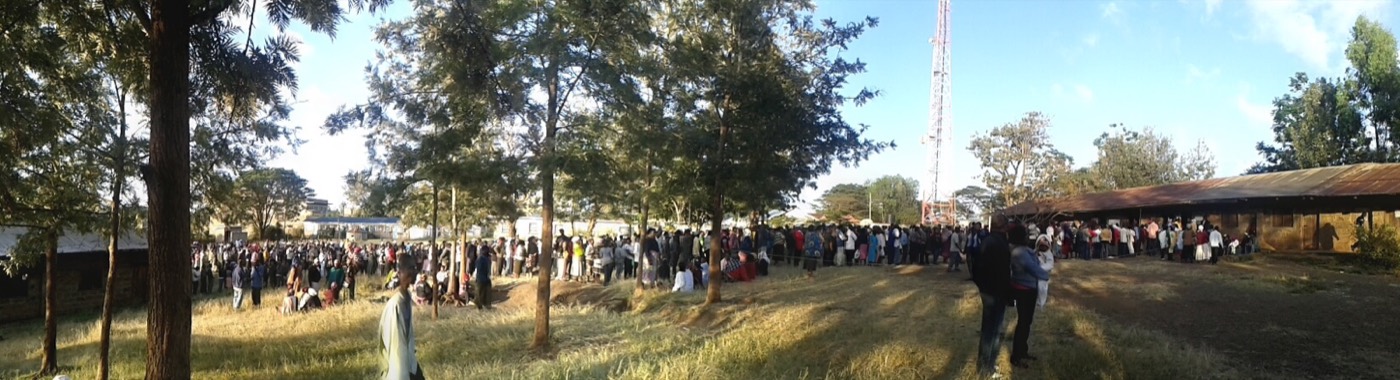
Long, uneventful and where discipline decays.
The agent's job is to observe and to object correctly when procedure is not followed — not to campaign, not to argue with voters, and not to leave.
Things worth noting as they happen: KIEMS identification failures and how they were handled, assisted voters and who assisted them, any interruption to voting, and the queue at intervals.
An agent who leaves for lunch and returns has a gap in their account of the day.
Close of voting
The second check-in, and the most important one. Anyone still in a queue at closing time is entitled to vote. The station does not close on the people already waiting.
A missing check-in here is the signal a campaign must act on immediately, because the next few hours are the exposed ones. In the November 2025 by-elections, armed men attempted to storm a polling station in Mbeere North during counting, not during voting.
The count
Six counts, one stream, in sequence: president, governor, senator, county woman representative, member of parliament, member of county assembly.
For each, the agent should record: the votes per candidate, the rejected ballot figure, and whether they signed or declined to sign the form.
Declining to sign is a right, not a protest. An agent who signs a form they believe is wrong has weakened any subsequent challenge.
The forms
Form 34A for president, 35A for MP, 36A for MCA, 37A for governor, 38A for senator, 39A for county woman representative.
Photograph every one, identified to the stream, before leaving. This is the single most valuable object the campaign produces all day, and it becomes impossible to obtain twenty-four hours later.
The third check-in, and going home
Confirm the result, confirm the forms are sent, and confirm the agent is leaving safely.
Then somebody at headquarters reconciles: every stream accounted for, every form captured, every payment made against a name.
Why a system rather than a group chat
Because at 9pm a campaign has hundreds of streams reporting at once and needs to know, immediately, which ones have not. Scrolling cannot answer that.
That is what BallotWinners is built to show: results assembled from your agents' forms at stream, ward, constituency, county and national level, every figure opening to the agent and the form behind it, and the streams that have gone quiet listed rather than lost in a feed.
Related: keeping agents safe.
The three documents an agent should leave with
A photograph of each signed result form, identified to the stream.
Their own tally sheet, written as the count proceeded rather than copied afterwards. A contemporaneous note in the agent's handwriting is evidence in a way a later transcription is not.
A note of anything irregular, with times. Not a complaint — a record. Whether it becomes a complaint is decided later by people with more information.
Anything the agent does not leave with is unavailable forever. Stations are cleared, forms move up the chain, and memories converge on whatever the campaign decided the story was.
That is why the brief matters more than the pep talk, and why it should be one page an agent can hold while standing up.
Frequently Asked Questions
What should a polling agent do before a Kenyan station opens?
Arrive before opening, present valid accreditation, witness the ballot boxes being shown empty, note the seals, and check in with campaign headquarters.
Can a voter still vote if they are queuing at closing time?
Yes. Anyone already in the queue when voting hours end is entitled to vote, and the station does not close on people already waiting.
Should a polling agent always sign the result form?
No. Declining to sign is a right, and an agent who signs a form they believe is inaccurate weakens any later challenge. The signed or unsigned form should be photographed and identified to its stream before the agent leaves.