Why the Opposition Wants an Independent Audit of the Voter Register
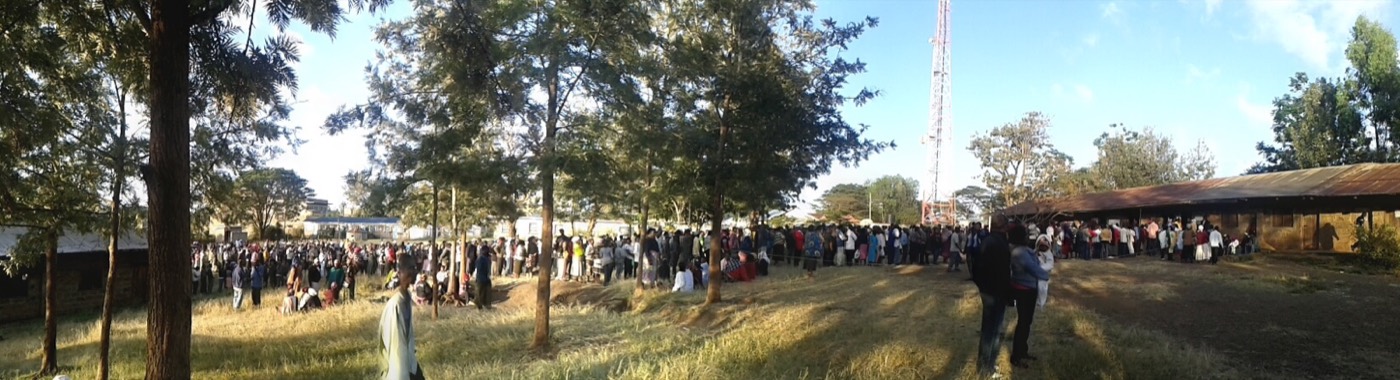
Opposition leaders want an independent firm to audit Kenya's voter register because they do not trust the register the IEBC will certify for 10 August 2027, and because the last audit, by KPMG in 2022, found hundreds of thousands of problem records. On 15 September 2026 they asked the Independent Electoral and Boundaries Commission (IEBC) to hire an auditor by 15 November 2026 and produce a clean register by 15 February 2027. The IEBC had already said on 20 August that an independent firm would carry out a forensic audit before certification. The quarrel is over timing, control and how much gets published.
The demand and its dates
The timetable was set out on 15 September 2026. The Nation reported it as part of the five demands of David Maraga's People's Coalition on Electoral Reforms. Nairobi Leo reported Justin Muturi (Siakago), the Democratic Party leader, reading out the same dates at a briefing in Nairobi.
| Step | Opposition's date |
|---|---|
| Independent auditor procured | 15 November 2026 |
| Cleaned register ready | 15 February 2027 |
| Full register published | 10 March 2027 |
| Inspection and verification complete | 10 April 2027 |
The coalition wants "an internationally reputable independent auditor" to run a multi-stakeholder audit of the register and the biometric records, with the findings published and reported to Parliament. It also wants voters able to check their biometric details for at least six months before the election, and biometric identification made mandatory on polling day.
Caleb Amisi (Saboti) put one complaint in legal terms. "IEBC's verification online portal is not an 'inspection' and does not constitute a publication of the online register of voters as required by the Elections Act," he said, as quoted by the Nation.
None of these dates binds the commission. They are the opposition's own. The wider list of demands is in Maraga's five demands for the IEBC.
The spark: dead voters
The briefing came a day after an exchange over the dead. Martha Karua (Gichugu), who leads the People's Liberation Party, said remarks by UDA Secretary-General Hassan Omar suggested that the biometric data of dead people could be used to help President William Ruto's re-election, and called it a gravely serious matter.
IEBC Commissioner Alutalala Mukhwana rejected the idea on 14 September. "The machines we have rely on biometrics such as fingerprints and iris. So how can a dead person register as a voter or even vote?" he said, Nairobi Leo reported. He also warned politicians that "we are tired of the statements that are hateful and erode public trust in IEBC."
Both sides can be right about different things. The KIEMS kit checks a living person at the polling station. An audit looks at the list itself: who is on it, whether they are alive, whether an ID number appears twice. A dead voter's record does not vote on its own, but it inflates the number of registered voters in a polling station, and that figure is printed on every results form and used to judge turnout. How deaths are supposed to leave the register is explained in how the register is cleaned of voters who have died.
What the 2022 audit found
The IEBC hired KPMG to audit the register before the 2022 election. Excerpts of its final report were put before the High Court in a petition by Gilbert Njoroge, and The Star reported on 18 September 2026 what they showed:
- 481,711 registrations with duplicate or missing identification numbers;
- 164,269 registrations whose ID numbers were invalid when checked against the National Registration Bureau's records;
- 246,465 deceased voters whose ID numbers were still on the register as of June 2022.
The 2022 register had 22,120,458 voters. Those three categories together come to 892,445 records, about 4 per cent of it, although some records may fall in more than one category. The court noted that the excerpts did not include the sections on database controls or the IEBC's responses to the findings.
The court has already opened a door
Justice Gregory Mutai's ruling on Njoroge's application, reported by The Star on 18 September 2026, said the KPMG findings raised "genuine issues concerning the accuracy and transparency of the voter register". He ordered the IEBC, until the petition is decided, to give accredited political parties and election observers standing access to the source code and audit logs for continuous voter registration.
He refused wider orders against the IEBC's technology, noting that the 2026 by-elections had run on it without any court stopping them, and that the hybrid system of biometric identification plus paper results forms can be checked by recounts. The remaining questions in the case are whether the IEBC must grant that access permanently and whether the register has been published as the law requires.
The IEBC's own plan
The commission's position is that an audit is coming anyway. On 20 August 2026 it said an independent professional firm would do a forensic audit of the register before it is certified. The Parliamentary Budget Office said the IEBC plans the audit between January and March 2027, with verification and audit finished 60 days before the election, which is around 11 June 2027.
That is where the gap sits. The opposition wants the firm in place by mid-November and the clean register by mid-February; the IEBC's schedule has the audit running into March. The commission had published no response to the opposition's dates as of 15 September, according to Streamline, and BallotWinners found no announcement of an auditor up to 23 September 2026.
Money is part of it. The PBO put the IEBC's 2026/27 shortfall at Sh23.7 billion, and the registration and operations line was Sh5.6 billion short of what the commission asked for. With about 2.9 million new voters added since September 2025, as set out in IEBC's registration figures, the register the auditor eventually examines will be bigger than the one KPMG looked at.
Frequently Asked Questions
Why does the opposition want an independent audit of the voter register?
Opposition leaders say they cannot trust the register without an outside check, citing dead voters and duplicate records. A 2022 KPMG audit found 246,465 deceased voters and 481,711 registrations with duplicate or missing ID numbers.
When does the opposition want the voter register audited?
It wants an auditor hired by 15 November 2026, a clean register by 15 February 2027, the full register published by 10 March 2027 and verification finished by 10 April 2027. These dates are not legally binding on the IEBC.
Is the IEBC going to audit the voter register?
Yes. The IEBC said on 20 August 2026 that an independent firm would conduct a forensic audit before the register is certified. The Parliamentary Budget Office said the audit is planned for January to March 2027.
Can a dead person vote in Kenya?
IEBC Commissioner Alutalala Mukhwana said on 14 September 2026 that fingerprint and iris checks on the KIEMS kits make it impossible. Critics say dead voters left on the register still distort registered-voter totals.