Hooded Men at a By-Election: The DCI Opens an Investigation
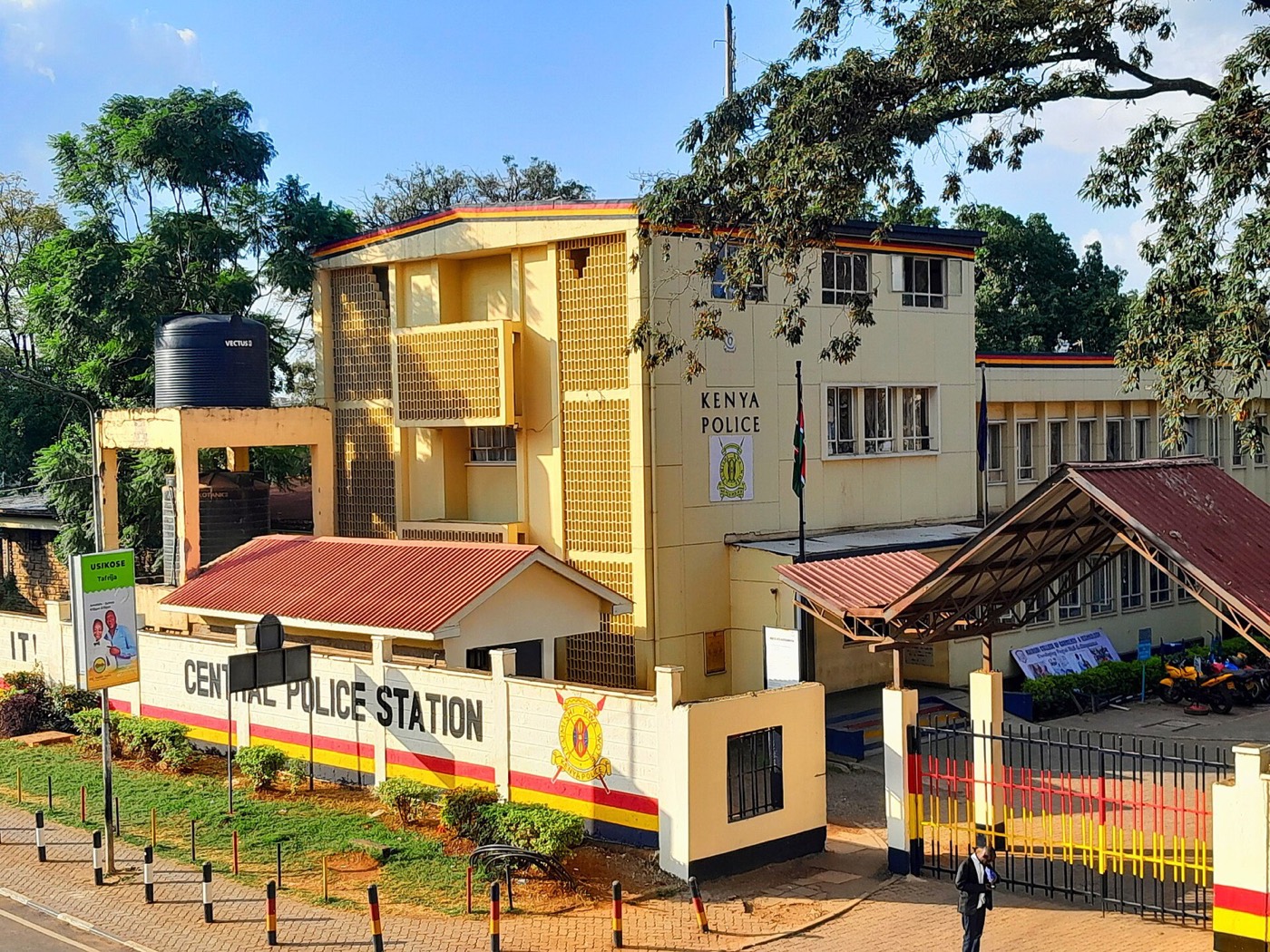
The Directorate of Criminal Investigations has opened an investigation into violence that marred the Ol Kalou parliamentary by-election, reportedly involving armed and hooded individuals.
That sentence has now been written about a Kenyan election so many times that it reads as procedure rather than as news. It is worth resisting that, because the procedure is where the problem lives.
What an investigation like this actually covers
Assault and grievous harm where people were injured. Malicious damage to property. Creating a disturbance. Being armed in a manner that constitutes an offence. Possibly offences under the Election Offences Act, depending on when the acts occurred relative to the election period and what was intended.
And, if the evidence reaches it, incitement or conspiracy — which is the charge that would reach whoever organised and paid rather than whoever turned up.
Why the last one almost never happens
Because the transaction is structured to prevent it.
Hired groups in Kenyan politics are engaged through intermediaries. The person handing out money is rarely the person whose interest is being served, and rarely knows their name. Payment is in cash. Nothing is written down.
So an investigation that begins with hooded men at a polling station has to work upward through at least two layers of deliberate insulation, using witnesses who are themselves participants and who have every reason not to cooperate.
It usually stops at the first layer, if it reaches that.
The pattern this sits inside
Kenya's Interior Cabinet Secretary said in April 2026 that more than 104 criminal gangs were operating under political patronage. The Kenya National Commission on Human Rights has been documenting political intolerance, intimidation and the alleged use of organised groups. The November 2025 by-elections produced a convoy ambush, a torched vehicle, two deaths in campaign clashes and an attempt to storm a polling station during counting.
An investigation into one incident, however diligent, does not address a market.
What a campaign can do that actually helps
Three things, and they are within reach of any campaign.
Record. Time-stamped video and same-day written notes are what turns an incident into a file. Reconstructed accounts three weeks later are not.
Report. To the police, to IPOA where officers are involved, to the human rights commission and to observer networks. The documented pattern that produces national warnings exists because individual incidents were reported.
Know who is yours. When something happens at your event the first question is whether the people involved were with you. A campaign where every volunteer, coordinator and agent is a named record with an assigned task can answer immediately. One that cannot will be assumed responsible, and being assumed responsible is itself a cost even where nothing is charged.
And the thing nobody says out loud
A by-election disrupted by hired men will produce an investigation, some arrests at the lowest level, and no consequence for anybody who benefited.
That has been the pattern for two decades and the political class knows it. Which is precisely why the rate card exists, and why enforcement alone has never reduced the supply.
Related: inside the market for political muscle.
What would have to change for this to end differently
Two things, and neither is more police.
Financial tracing. Hired disruption is paid for, and payment leaves a trace unless it is entirely cash. The 2027 requirement that campaign money move through designated accounts makes cash outside the account conspicuous in a way it has not been before — not because anybody will audit it, but because a large unexplained gap between an account and observed spending is now a question somebody can ask.
Protected witnesses. The people who know who organised a disruption are the people who were hired, and they have no incentive and no protection. Until that changes, investigations will keep reaching the first layer and stopping.
Neither is going to be in place before August 2027. Which is why the practical advice to campaigns remains defensive rather than hopeful: plan events for disruption, record everything, and be able to prove who was acting for you.
Frequently Asked Questions
What is Kenya's DCI investigating at Ol Kalou?
The Directorate of Criminal Investigations opened an inquiry into violence that marred the Ol Kalou parliamentary by-election, reportedly involving armed and hooded individuals.
Why are organisers of political violence rarely prosecuted in Kenya?
Because engagements are made through intermediaries, paid in cash and never documented, so investigations must work upward through deliberate insulation using witnesses who are themselves participants.