Provisional First, Full Later: How Kenya Registers a Political Party
Registration happens twice.
The Political Parties Act 2011 splits the birth of a Kenyan political party into two stages. Provisional registration lets an outfit exist, open an office and recruit. Full registration is the stage that matters on a ballot paper: only a fully registered party can nominate candidates, qualify for money from the Political Parties Fund, and have its name printed beside yours on a results form.
Most of the confusion about new parties in 2026 comes from collapsing those two stages into one word.
What provisional registration actually gets you
An application goes to the Registrar of Political Parties, the office the Act creates for exactly this. It comes from the party's promoters and it carries the proposed name, abbreviation, symbol and slogan, a draft party constitution, the party rules, the names of interim officials and the address of a national office.
The Registrar checks that the name and symbol are not already taken and are not confusingly similar to those of a party that already exists. The Act also bars names and symbols built on ethnicity, religion, gender, region or occupation, and anything carrying a connotation of violence.
If the application clears that filter, notice of it is published so that members of the public can object within the period the Act allows. Objections are heard, not merely filed.
Provisional registration is permission to organise. It is not permission to nominate.
What has to happen between provisional and full
A party has a window, fixed by the Act, in which to convert. Miss it and the provisional registration lapses and the promoters start again.
Inside that window the party has to do three things at once. Recruit members and record them properly. Hold the meetings its own draft constitution requires, including the ones that elect the officials whose names it will submit. And produce the documents the Registrar will actually read: accounts showing how the party has been funded, the location of its offices, and its register of members.
The membership test is a spread test, not a headcount
This is the requirement that defeats most applications.
The Act does not simply ask for a number of members. It asks for members who are registered voters, drawn from a minimum number of counties, with a ceiling on how much of the total may come from any single county. It separately requires the party's governing body to reflect regional and ethnic diversity, gender balance, and the representation of minorities and marginalised groups.
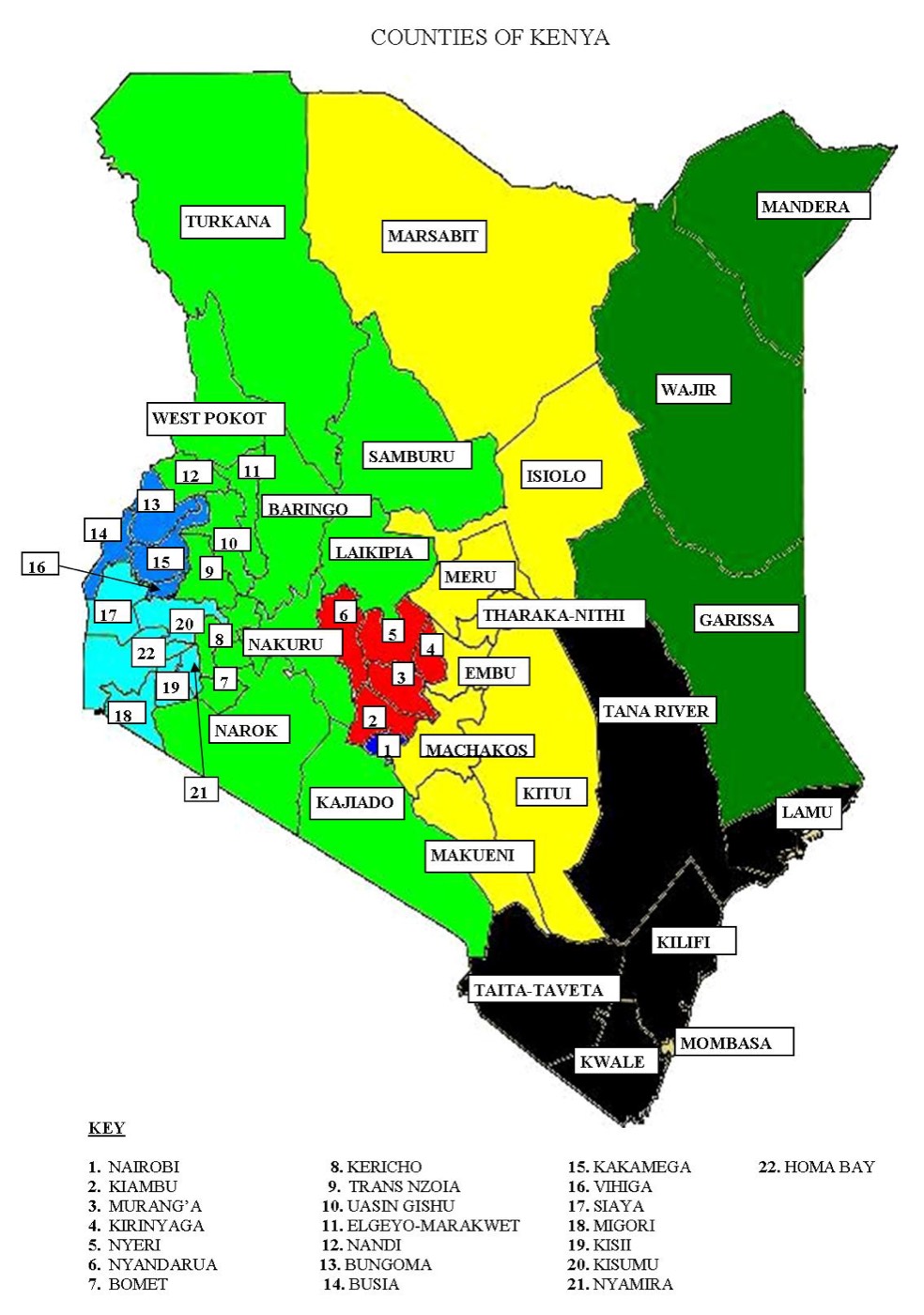
A party with a hundred thousand members in one county and nobody anywhere else fails. That is the design. Kenya has 47 counties, and the spread requirement exists so that a national party cannot be one community with a logo.
The exact figures sit in the Act and have been amended more than once. Read the current text, or ask the Registrar's office directly, before you build a recruitment target around a number somebody quoted at a meeting.
Related: what happens to the parties that never convert.
What the Registrar reads in a party constitution
Not the preamble.
The Act requires a party constitution to contain specific machinery, and the Registrar checks for it. A defined membership: who may join, how, and how membership ends. Organs, with stated powers and stated terms of office. A procedure for electing officials that is an election rather than an appointment. A disciplinary process. And an internal dispute resolution mechanism, because the law will later require members to use it before going anywhere else.
None of that is decoration. Every clause becomes justiciable the first time the party has a serious internal fight, and a party whose constitution is vague about who may convene its national executive organ will discover that in the worst possible week of the cycle.
What a registered party has to keep doing
Registration is not a permanent condition.
A fully registered party files annual returns and audited accounts, notifies the Registrar of changes to its constitution, officials, offices and symbol, maintains its register of members and submits it, and keeps meeting the requirements it met at registration. Failure on any of those is a ground on which a party can be deregistered.
Related: how membership is actually recorded.
What to check before you build a campaign on a party
Ask three questions, and ask them before you pay anything.
Is the party fully registered, or only provisionally registered? A provisionally registered party cannot nominate you for the general election on 10 August 2027, and an assurance that it will convert in time is not the same thing as it having converted.
Has it filed what the Act requires? A party sitting under a compliance cloud is a party whose candidates may spend the weeks before nominations arguing about their own certificates instead of campaigning.
Does its constitution describe organs that actually meet? A dormant national executive committee stops being a technicality the moment your nomination certificate has to be signed by somebody with authority to sign it.
Get the answers in writing, from the party, and keep them.
Frequently Asked Questions
What is the difference between provisional and full registration of a party in Kenya?
Provisional registration allows a party to exist, open offices and recruit members. Full registration is what allows it to nominate candidates for election and to qualify for the Political Parties Fund. A provisionally registered party has a limited window under the Political Parties Act to meet the full registration requirements, and the provisional registration lapses if it does not.
Why do so many party registration applications fail in Kenya?
Usually on the membership requirement, which is a spread test rather than a simple headcount. The Act requires members who are registered voters drawn from a minimum number of counties, with a ceiling on how many may come from any one county, plus diversity and gender balance in the governing body. A large membership concentrated in one region does not satisfy it.
Who registers political parties in Kenya?
The Registrar of Political Parties, an office established under the Political Parties Act 2011 and commonly referred to as the ORPP. The Registrar receives applications, publishes notice of them, hears objections, keeps the register of parties and the register of party members, and has the power to deregister parties on the grounds the Act sets out.