Seven First-Term Governors Are in Real Trouble Ahead of 2027
Updated 2 October 2026.
There is a pattern in Kenyan devolution that the political class discusses constantly and voters rarely hear named: county governors have a hard time getting re-elected.
Every cycle since 2013 has removed a substantial share of sitting governors, and the 2027 cycle is shaping up to remove more. Kenyan reporting through 2026 has been tracking a group of first-term county bosses under serious pressure to keep their seats.
Why the job is harder to hold than it looks
Everything visible is yours. A governor is responsible for roads that are not tarmacked, hospitals without drugs, garbage that is not collected and a water supply that fails. National government failures are diffuse; county failures have an address.
Your own MCAs can impeach you. Eleven governors have been impeached by their county assemblies since devolution began. Even a failed impeachment consumes a year and defines a governor publicly as embattled.
The Senate is a second front. County Public Accounts oversight produces a steady stream of unflattering headlines, and governors have complained openly about how those sessions are conducted.
Your deputy is often your opponent. Kenyan deputy governors have a striking tendency to run against their principals.
Every MP in your county wants your job. A constituency is a natural launchpad and the arithmetic of a county seat is only ever a few constituencies wide.
What separates the survivors
Watching Kenyan county politics over three cycles, the governors who hold on generally share three things, and none of them is charisma.
One completed, visible, verifiable thing. Not a portfolio. One project a voter can point at and say that was not here before. Governors who campaign on aggregate spending lose to challengers who campaign on a hospital.
A ward-level structure that outlasts the county government. A governor who is only known through the county's communications department has no independent relationship with voters. One with an active coordinator in every ward does.
A complaint system that closes things. The most under-rated asset in county politics is a record of problems raised by residents and actually resolved, with the resident knowing who resolved it. It is the only form of incumbency that is worth more than the criticism incumbency attracts.
The part that is an operations problem
That third one is where nearly every county administration fails, and it fails for a boring reason: complaints arrive verbally, in the field, to whoever is standing there, and are never written down.
A ward coordinator hears about a broken water point at a funeral. Nothing records it. Nobody follows up. Eighteen months later the same complaint is the reason a household votes for somebody else.
Fixing that is not a governance reform. It is a logging habit: complaint captured at the point it is raised, with a photo and a location, assigned to somebody, and closed out. That is exactly what we built into BallotWinners for MP and MCA campaigns, and it is the single highest-value thing a first-term governor's political operation could adopt today.
The timing point
Eighteen months out is the last moment at which any of this can still change a result. A governor who starts logging and closing complaints in mid-2026 has a record by mid-2027. One who starts in 2027 has a promise.
Related: every governor defending a seat.
The deputy governor problem, specifically
Kenyan deputy governors run against their principals with a regularity that would be remarkable anywhere else.
The reason is structural. A deputy governor has a constitutional title, a county-wide profile and, in most counties, almost nothing to do. The office has no independent portfolio unless the governor grants one, and a governor who grants one is creating a rival with a record.
So the deputy spends five years being known and being idle, which is close to the ideal preparation for a challenge.
For a sitting governor, there are exactly two workable responses: give the deputy real, visible responsibility and accept the risk, or accept that you are running against them in the primary and plan for it from 2026 rather than discovering it in 2027.
Neither is comfortable. Choosing neither is what most do, which is why the pattern repeats.
Who is actually under pressure
Naming names, because "governors face a test" is a headline rather than a finding.
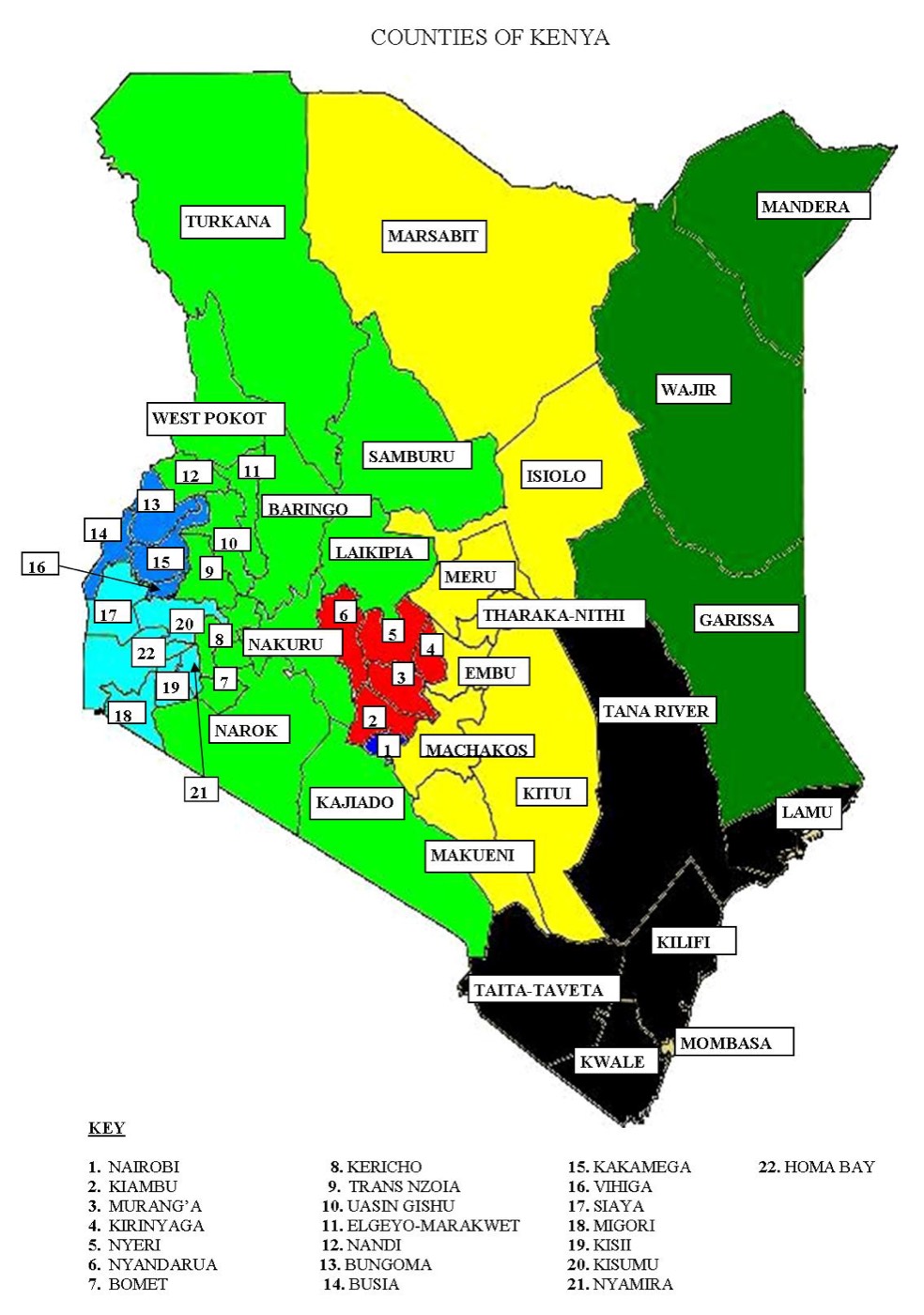
Nakuru. Governor Susan Kihika is under pressure over her development record, in a county where the fallout between the President and the former Deputy President has scrambled the local map, and where Senator Tabitha Karanja adds a second centre of gravity.
Kiambu. Governor Kimani Wamatangi faces businessman John Mwaura, unveiled as a DCP candidate, in the most populous county in the country — with Thika Town MP Alice Ng'ang'a among the UDA aspirants.
Kakamega. Governor FeFernandes Barasas in an open rivalry with County Woman Representative ElElsie Muhandawho has accused him of under-performance, while Deputy Governor AyAyub Savulas among UDA aspirants for the seat.
Meru. Former governor KaKawira Mwangazaas removed in August 2024, when the Senate upheld her impeachment, and she lost her High Court challenge in March 2025. The county's 2027 race is being run in the aftermath of that.
Four counties, four different mechanisms — a development record, a well-funded challenger, an internal rival, and an impeachment — and the same outcome in each: an incumbency that has to be defended rather than assumed.
Frequently Asked Questions
Why do Kenyan governors struggle to win a second term?
County failures are highly visible and locally attributed, county assemblies can and do impeach governors, Senate oversight generates continuous negative coverage, deputy governors frequently run against their principals, and every MP in the county is a potential challenger.
How many Kenyan governors have been impeached?
Eleven county bosses have been impeached by their county assemblies since devolution began in 2013, though not all impeachments have been upheld by the Senate.