Your Campaign's Polling Day Starts at 5am. Here's the Whole Schedule.
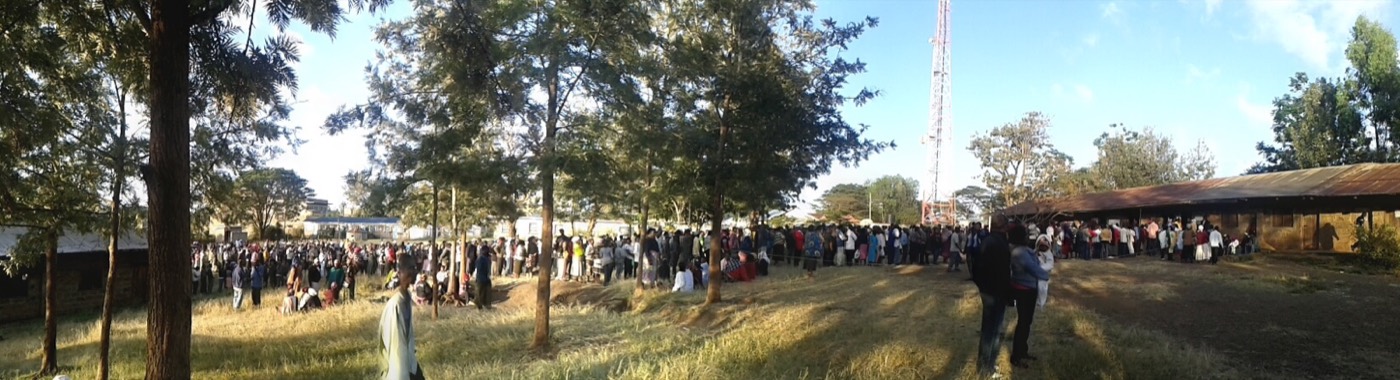
Your polling day does not begin when the station opens. It begins the night before, and the first thing that goes wrong is always somebody who did not know where to be.
Kenya votes on 10 August 2027. Six ballots, one day, and a result that is effectively settled by the time the last form is signed. What follows is your schedule, not the commission's. The IEBC has its own timetable and its own officers. Yours is about where your people are and what they are holding.
Related: the same day seen from the voter's side.
What has to be finished before the night before
Four things exist on paper by the evening of 9 August 2027, or your day is already compromised.
A named agent for every polling stream, with a second name behind each one. The stream is the unit, not the station. A large station is split into streams, and each stream has its own presiding officer, its own ballot boxes and its own set of forms. An agent covering two streams is covering neither.
An appointment letter for each agent, issued in the form your party or your candidate is required to use, carried with their national ID. No letter, no entry, and no argument at the door will change that.
A ward-by-ward movement list: who travels with whom, in what vehicle, from where, at what time.
A printed contact sheet. Phones die and networks fail. Paper does not.
The first two hours, and the moment you cannot get back
Your agents should be standing outside their stations before the presiding officer opens the door.
The reason is specific. Before voting begins, the presiding officer shows the empty ballot boxes to the agents who are present and seals them. An agent who arrives an hour late has missed the one event of the day that cannot be reconstructed afterwards, and has given up a witness point for nothing.
The instruction to each agent is short enough to say on a phone call. Arrive early. Introduce yourself to the presiding officer by name. Sign whatever you are asked to sign, including the declaration of secrecy. Watch the boxes sealed. Write down the seal numbers. Then sit down and stop talking.
Your ward coordinators are moving at the same hour, confirming that every stream is occupied and reporting gaps to one person rather than to a group.
Mid-morning, when your job changes from placing people to counting
Once the early queue thins, placement is finished and measurement begins.
Every agent sends one number at an agreed time: how many voters have been processed at that stream. Not an impression, not "it is busy". A number they can point at.
That is what lets you compare a ward against its own expectation and against its neighbours. One slow station may be a KIEMS problem. A whole ward running slow is a turnout problem, and a turnout problem is fixable while the polls are still open.
Related: how to run that count through the day.
The afternoon is your last real window
This is when a campaign either uses its structure or finds out it does not have one.
Late mobilisation is door-by-door and phone-by-phone, against a list of people you know have not yet voted. It is not a convoy, a rally or a loudspeaker in a market. It is a named volunteer knocking on a named door with a specific name in mind.
Set a cut-off time and hold it. Anyone already in the queue when the station closes is entitled to vote, so a person you reach in time counts exactly as much as one who voted at breakfast. A person you reach too late costs you fuel, a volunteer's afternoon and some goodwill.
Closing, and the part campaigns forget to plan for
The longest stretch of your day starts after the last voter.
Your agents do not go home at closing. They stay for the count. They watch the results form filled in. They check the arithmetic. They sign it if it is right and record an objection if it is not, and they leave holding a copy signed by the presiding officer. That copy is the most valuable document your campaign will ever hold.
Plan for that stretch the way you planned the morning: food, a charged phone, a torch, and transport arranged on the assumption that the count runs into the night, because it often does.
Turn this into one page per ward
Take the schedule above and write it out as a single page for each ward, with a name against every line and a time against every name. One page, one ward, one coordinator holding it.
Then rehearse it. Pick a ward in 2026, run the morning as a drill, and find out which of your agents cannot say which stream they are assigned to. You would much rather discover that now than at 5am on 10 August 2027.
Frequently Asked Questions
What time should campaign polling agents arrive on polling day?
Before the presiding officer opens the station. The empty ballot boxes are shown to the agents present and then sealed, and an agent who arrives after that has missed the only moment in the day that cannot be reconstructed later. Arriving early also gives them time to introduce themselves and complete the paperwork the presiding officer requires.
What does a polling agent need to be allowed into a station?
An appointment letter in the form your party or candidate is required to issue, and their national ID. Both are checked at the door. A campaign that leaves the letters until the night before will lose streams on the day, because there is no way to fix a missing letter once the station has opened.
Should polling agents leave when voting closes?
No. The count happens at the polling station after the last voter, and the agent's most important work happens there. They watch the count, check the results form, sign it or record an objection, and leave with a copy signed by the presiding officer.