The 28-Day Window: Petitions for Every Seat Below the Presidency
Updated 2 October 2026.
Five of Kenya's six ballots are challenged the same way, under the same deadline, on the same principles. The differences are practical rather than legal, and they are large.
Every election petition other than a presidential one is filed within 28 days of the declaration of that result.
The deadline runs from your seat, not from polling day
This trips people up.
The 28 days count from the declaration of the result being challenged, not from 10 August 2027 and not from the presidential declaration. Constituency and county tallies close at different times, so two candidates in the same county can have deadlines days apart.
Find out the exact date and time your returning officer declared, and write it down that week. It is the single most important date in any petition you might later bring, and reconstructing it from memory in week three is how windows get missed.
Which court hears which seat
The High Court hears petitions concerning a governor, a senator, a woman representative and a member of the National Assembly.
Petitions concerning a member of a county assembly are heard by magistrates' courts gazetted for that purpose. That gazettement is what confers the jurisdiction, so the venue for an MCA petition is not simply the nearest court.
Related: the full petition sequence.
What changes between the seats, and where petitions are rarest
Geography, and therefore volume.
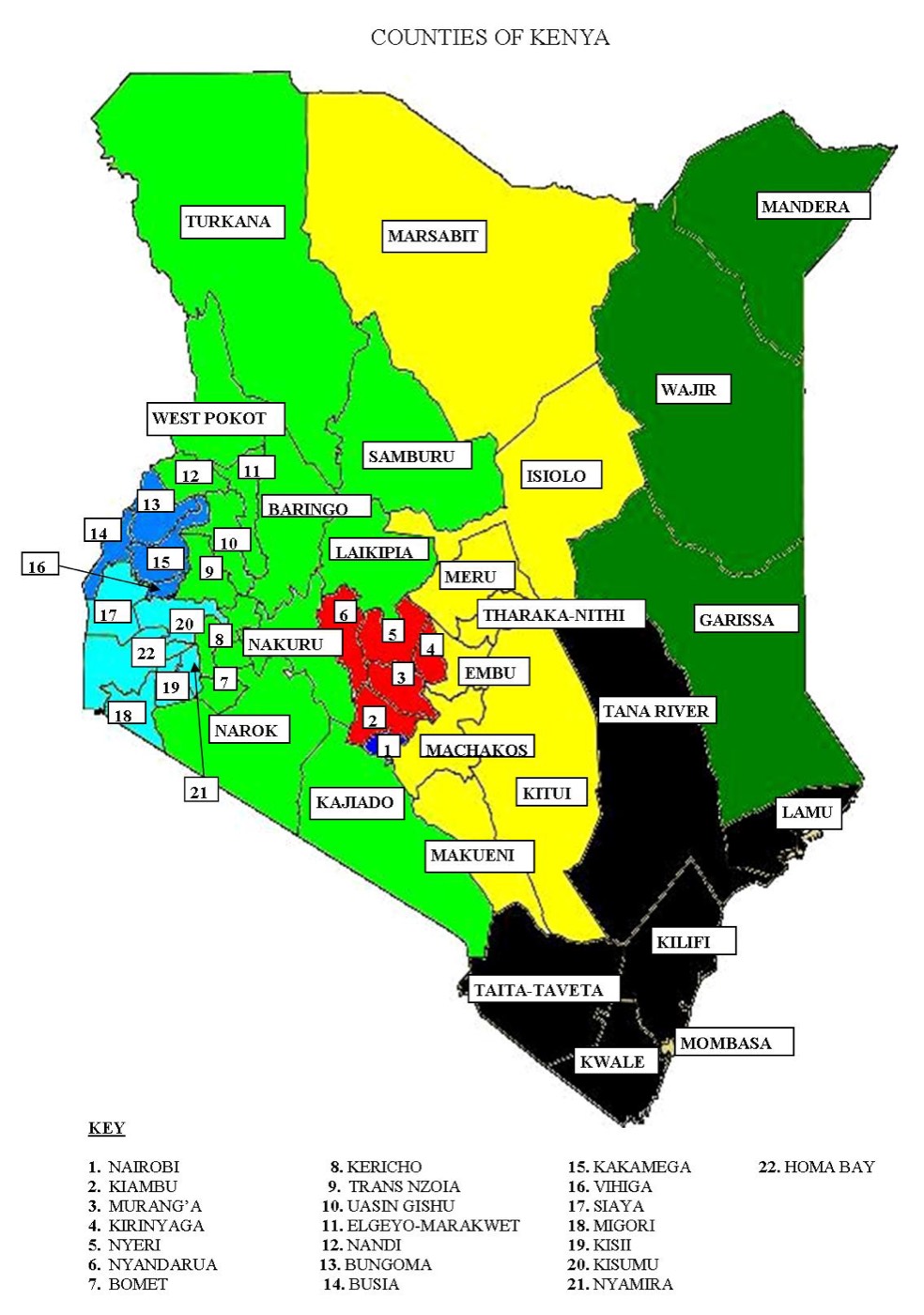
An MCA petition covers one ward. There are 1,450 of them, and a ward's Form 36A set is small enough for one organised person to hold in a box file.
An MP petition covers one constituency. There are 290, and the Form 35A set for a constituency runs to every polling station inside it.
A governor, senator or woman representative petition covers an entire county. There are 47, and a county's Form 37A, 38A or 39A set is the same paper volume as every constituency inside that county combined.
The law is identical across all of them. The cost of assembling a case is not remotely identical, and that difference decides which petitions get filed.
Senator and woman representative races are county-wide, exactly like a governor's race, but campaigns for those seats usually run far thinner agent networks.
A candidate who had agents in a third of the county's streams cannot build a county-wide arithmetic case, because two thirds of the forms they would need to compare are forms they never received a copy of. The petition is legally available and evidentially impossible.
That is a resourcing decision made months before polling day, and it is almost never made deliberately.
The number nobody collects
Rejected ballots.
Every station form in every series has a line for them. In a close ward or constituency the rejected figure can exceed the margin, and it is one of the few numbers on the form that a court can examine directly through scrutiny of the ballots themselves.
Related: the rejected-ballot line.
What the 28 days are actually for
Not for deciding whether you feel aggrieved. For assembling a pleading.
In that month you have to collect the forms you hold, identify precisely which stations you are challenging and on what basis, obtain sworn statements from the agents who were present, calculate the effect of each alleged error on the result, instruct counsel, pay the filing fee, and lodge the security for costs that section 78 of the Elections Act fixes within ten days of filing.
A month is enough for that only if the collection happened on polling night. It is nowhere near enough to start from an empty file.
What to do about it now
Work backwards from the paper.
Decide today how many polling streams your seat contains and whether you can name a human being for each one. If you cannot, that is your first task, and it takes months rather than weeks.
Then set the rule that every agent leaves the station with a signed copy of the results form for that stream, and that every copy reaches one named person the same night. Photographs are useful and a signed copy is better.
Do that in 2026 and the 28-day window in 2027 becomes a month of drafting rather than a month of searching.
Frequently Asked Questions
When does the 28 days for a Kenyan election petition start?
From the declaration of the result being challenged, not from polling day and not from the presidential declaration. Because constituency and county tallies close at different times, candidates in the same county can face deadlines several days apart. Record the exact date your returning officer declared.
Who hears an MCA election petition in Kenya?
Magistrates' courts gazetted for that purpose hear petitions concerning members of county assemblies. The gazettement is what confers the jurisdiction, so the correct venue is not simply the nearest court. Petitions for governor, senator, woman representative and MP go to the High Court.
Why are senator and woman representative petitions so rare?
Those races are county-wide, so a petition needs the county's whole set of station forms to make an arithmetic case. Campaigns for those seats usually run thinner agent networks than gubernatorial ones, so most of the forms were never collected. The petition is legally available and evidentially impossible.