Can Kenya's Retired Presidents Lead Political Parties? Two Judges Disagree
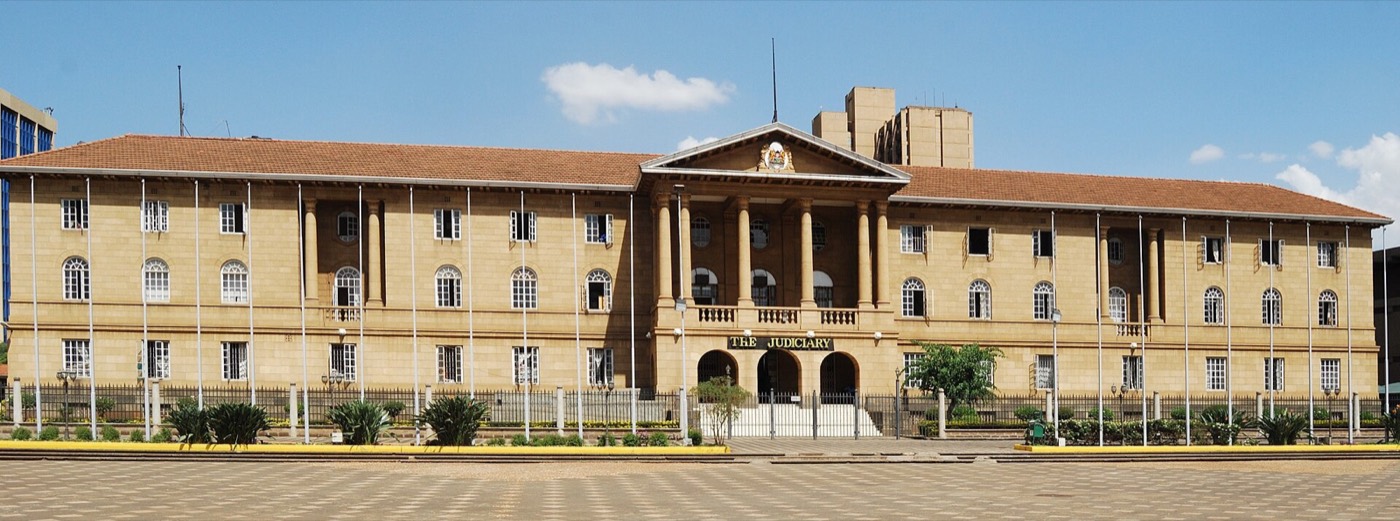
As of 23 September 2026 the answer depends on which High Court judgment you read. On 14 September Justice Lawrence Mugambi upheld section 6 of the Presidential Retirement Benefits Act, which bars a retired president from holding party office more than six months after leaving State House. On 21 September Justice Bahati Mwamuye declared the same section unconstitutional and void. Both sit in the same court, so neither judgment overrules the other. Only an appeal can settle it.
What the law says
The Presidential Retirement Benefits Act was passed in 2003. Section 6(1), as the Nation quoted it, reads: "A retired president shall not hold office in any political party for more than six months after ceasing to hold office as president."
According to the Nation, the Act followed concern after Daniel arap Moi's 24 years in power that a former head of state could keep control through proxies. Kenya has one living retired President. Uhuru Kenyatta left office in September 2022 and remained Jubilee Party leader until 22 September 2026.
Judgment one: the ban stands (14 September)
Justice Mugambi dismissed a petition by Peter Odhiambo Agoro, Paul Muiruri Kiguathi and Damon Onyango Osawa, filed in May 2023, who argued the section violated their rights to equality, association and political participation.
The law "does not forbid the retired President from being a member of a political party, what it restricts is taking up a leadership role," the judge held, as reported by the Nation. He called the rule a "lawful safeguard against former heads of state exercising power indirectly through political proxies" and found it a reasonable limit on rights under Article 24 of the Constitution. The Standard quoted him: "A retired President belongs to a special constitutional category of citizens that enjoys constitutionally sanctioned benefits."
Uhuru's office accepted the ruling on 15 September. He handed Jubilee to Fred Matiang'i on 22 September, which we covered in Uhuru's handover to Matiang'i.
Judgment two: the ban is void (21 September)
Justice Mwamuye ruled on a petition by Sheria Mtaani and Shadrack Wambui, filed at the Kiambu Law Courts. The Star reported on 21 September that he struck down section 6 in its entirety, together with sections 4(1), 4(2) and 4(3), which had allowed a retired president's benefits to be withheld, reduced or withdrawn in set circumstances. He left section 4(4) standing.
The Star quoted two lines from his reasoning. "A retired President remains a citizen. Retirement from office ends the office; it does not end the person." And: "Influence is not office. Influence is not executive authority."
On benefits, he relied on Article 151(3) of the Constitution, which says a former President's retirement benefits shall not be varied to his disadvantage during his lifetime. He called it "an express and absolute protection" that ordinary legislation cannot override. The Senate, the National Assembly and the Attorney General were the respondents.
How two judges can disagree
A High Court judge is not bound by another High Court judge's decision, so the later ruling does not cancel the earlier one. Each binds the parties in its own case. An answer that binds everyone has to come from the Court of Appeal or the Supreme Court.
High Court rulings on election questions are often read more widely than they were written. The Malindi ruling on the election date is a recent example of a decision whose effect was far narrower than the headlines suggested.
What it means in practice
Uhuru handed Jubilee over on 22 September, a day after the Mwamuye judgment, and became a senior adviser. The Star suggested the second ruling would let him hold party office lawfully. As of 23 September he had not reversed the handover.
The opposition coalition is a separate question. Kalonzo Musyoka said on 21 September that Uhuru chaired The Ukombozi Alliance, and The Star reported two days later that he was expected to pass that chair to James Orengo (Governor, Siaya). Neither judgment was reported to deal with a coalition chair directly.
While it stands, the Mwamuye judgment also removes the statutory route to cutting a retired president's benefits over political activity.
The history of Jubilee's decline is in Jubilee's slide to third in the fund.
What to watch
- A notice of appeal against either judgment. Parliament and the Attorney General were the respondents in the Mwamuye case.
- Whether Jubilee's National Delegates Convention treats Uhuru's senior adviser role as a party office.
- Whether Uhuru formally files as chair of The Ukombozi Alliance with the Registrar of Political Parties.
Frequently Asked Questions
Can a retired president hold party office in Kenya?
The High Court has given two answers. Justice Mugambi upheld the six-month ban in section 6 of the Presidential Retirement Benefits Act on 14 September 2026, and Justice Mwamuye declared it unconstitutional on 21 September 2026. An appeal would settle it.
What does section 6 of the Presidential Retirement Benefits Act say?
Section 6(1) says a retired president shall not hold office in any political party for more than six months after ceasing to hold office as president.
Can a retired president still take part in politics?
Yes. Even the judgment that upheld the ban said it restricts only leadership roles, leaving party membership and political activity alone.
Did Uhuru Kenyatta give up the Jubilee leadership?
Yes. He handed the Jubilee Party to Fred Matiang'i on an interim basis on 22 September 2026 and became a senior adviser.