How to Find Out Which Polling Station You Vote At
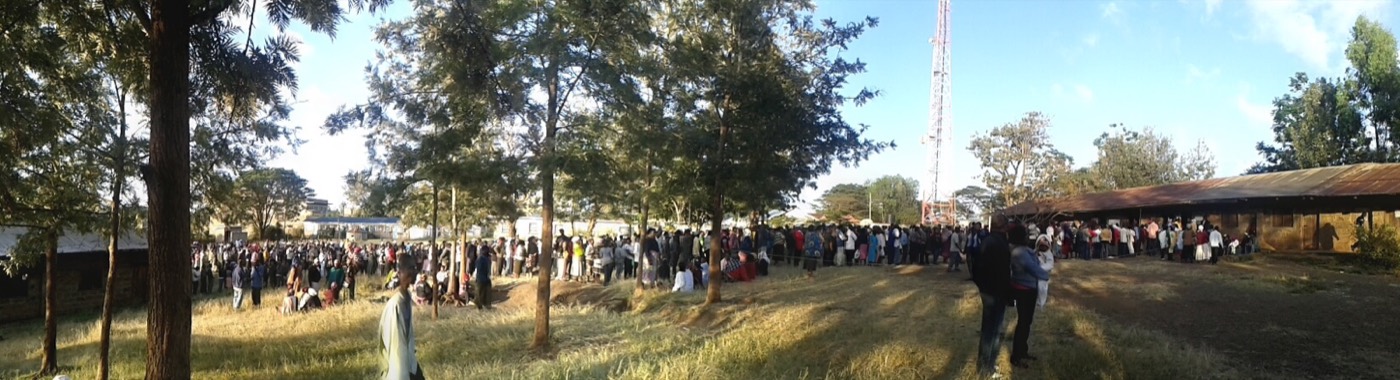
You do not choose your polling station. It is assigned to you, and the assignment lives on your entry in the voter register.
That one fact clears up most of the confusion. People assume the station is the school nearest their house, or the one they used in the last election, or the one the rest of the family uses. None of those is the rule.
How the assignment was made in the first place
You were assigned at the moment you registered. Wherever you presented yourself to a registration clerk, you were registered into the polling centre serving that area, and your name went onto a register attached to a specific station inside it.
A polling centre is the physical place: a primary school, a chief's camp, a social hall. A polling station, sometimes called a stream, is a unit within the centre. A centre with many registered voters is split into several stations so that no single queue becomes unmanageable, and each station has its own presiding officer, its own KIEMS kit and its own set of results forms.
So the complete answer to "where do I vote" is a centre and a station within it. Both matter on the day. Arriving at the right school and joining the wrong stream costs you an hour and sends you to the back of another queue.
The ways to find out
The IEBC operates an online verification portal, an SMS short code service and in-person checks at its constituency offices. All three return the same core answer: your registration status and the polling station attached to your name.
The portal address, the short code and any charge on the text message are published by the Commission, and the right place to get them is an official IEBC announcement rather than a forwarded screenshot. The full procedure, including what to do with each possible result, is in how to verify your details.
If the answer confuses you, use the office. A portal can tell you that you are not found. Only a person can tell you why.
Why last time is not a safe guide
Three ordinary things move a voter between stations.
You transferred, or somebody transferred you when they helped you with a form years ago and you never confirmed the result.
The Commission split or merged stations at a centre as its registered numbers changed. Streams are created to keep queues workable, and the arithmetic that produces them changes as registration changes.
A centre was retired, renamed or replaced. Buildings close. Schools are rebuilt. The name printed on the register is the name that counts.
None of those events sends you a notification. Checking is the notification.
What your station decides about your six ballots
Your station sits inside a ward. The ward sits inside a constituency. The constituency sits inside one of Kenya's 47 counties.
Those containers decide five of the six papers you are handed. The ward decides your MCA. The constituency decides your MP. The county decides your Governor, your Senator and your Woman Representative. Only the presidential ballot is the same everywhere. What each paper does is set out in every Kenyan ballot paper.
This is why the station is not a trivial administrative detail. It is the address that determines which five local races you have a say in, and it is determined by where your registration sits rather than by where you sleep.
Before polling day, and on it
Knowing the station in advance also changes how the day itself goes. The sequence of a Kenyan polling day is predictable, and what happens hour by hour is worth reading once before you queue for the first time.
A voter who knows the centre, the stream and the route arrives once. A voter who does not arrives twice, and the second arrival is usually in the afternoon heat with a queue in front of it.
Do this
Check now, in 2026, and write the result down in full: the centre name, the station or stream, and the ward it falls in. Put it somewhere you will still have it in 2027, which for most people means a note on the phone rather than a piece of paper.
Then check it again when the Commission publishes the register for public inspection. Stations move between those two moments, and the second check is the one that catches it.
Frequently Asked Questions
What is the difference between a polling centre and a polling station?
A polling centre is the physical location, such as a school or social hall. A polling station, often called a stream, is a unit inside that centre with its own presiding officer, its own KIEMS kit and its own results forms. A centre with many registered voters is split into several stations so no single queue becomes unmanageable.
Can I vote at any polling station on election day?
No. You vote at the station your registration is attached to, and the presiding officer at another station has no way to add you. This is why verifying the assignment in advance matters, and why a voter who has moved needs a transfer rather than a plan to explain themselves at the gate.