Turnout Fell From 86% to 64.8%. That's the Real 2027 Battleground.
Three numbers explain more about Kenyan politics than any opinion poll published this year.
2013: about 86 per cent turnout. 2017: about 78 per cent. 2022: 64.77 per cent — 14,326,641 votes cast out of 22,120,458 registered.
In nine years, roughly a fifth of the Kenyan electorate stopped turning up.
What that means arithmetically
In 2022, close to eight million registered voters did not vote.
Eight million is larger than the margin of any Kenyan presidential election ever held. It is larger than the total electorate of most African countries. And it is a pool that no campaign is systematically working, because campaigns are built to persuade voters rather than to produce them.
Scale it down and it is the same picture in a ward. A ward with 12,000 registered voters at 65 per cent turnout has 4,200 people who did not vote. An MCA race is often decided by four hundred. The non-voters are ten times the margin.
Why the decline is happening
Not one reason, but the strands are consistent in Kenyan research.
Disillusionment rather than laziness. The recurring finding is that non-voting is a considered response to elections that have not changed material conditions — a rational withdrawal, not an absence of information.
Youth concentration. In 2022, 18-to-35s were about 39.84 per cent of the register — some 8.8 million people — and among the least likely to turn out.
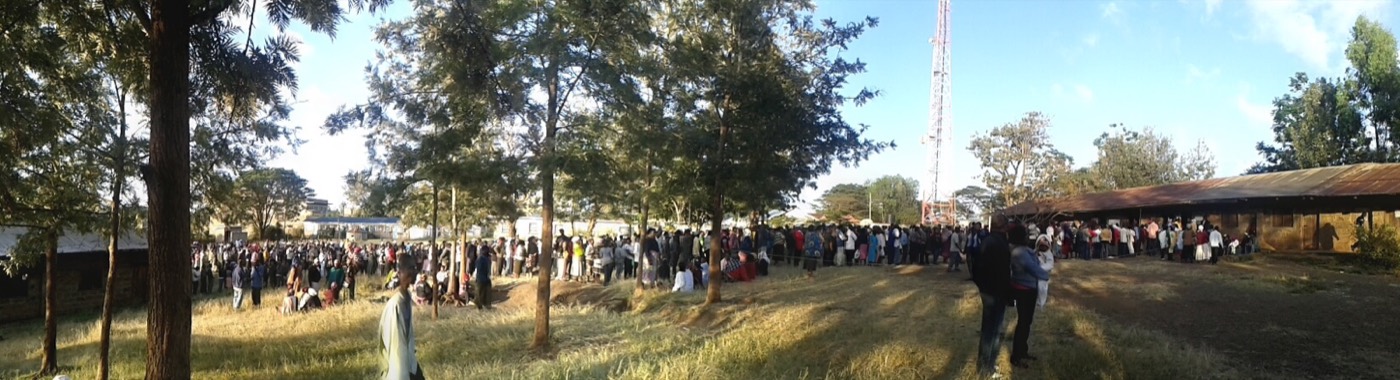
By-election evidence. The November 2025 by-elections were marked by short queues and open discussion of voter apathy alongside violence and bribery allegations. Where turnout is low, a few hundred votes decides a seat, which changes the incentives of everyone involved for the worse.
The campaign consequence nobody acts on
Every campaign budget we have seen is built around persuasion: rallies, posters, radio, T-shirts, social media. Persuasion moves a voter from one column to another.
Turnout work moves a voter from no column at all into yours. In a race where 35 per cent of the register is sitting out, turnout work has a materially larger available pool than persuasion does, and it is cheaper per vote.
It is also harder, because it requires knowing which specific people did not vote and having somebody go to them. That is not a poster. It is a list, a person, and a Saturday.
What a turnout operation actually is
Four things, none of them exotic.
A list. Registered voters in your ward, by polling station. Public information, and most campaigns do not have it in usable form.
Contact. Somebody physically visits, records who they spoke to and what was said. Not a bulk SMS. A visit.
A count that somebody looks at weekly. Households visited this week, by ward, by volunteer. If nobody looks at it, it stops happening by the third week. This is reliably true.
A polling-day plan for the people you identified. The point of knowing who your supporters are is that on 10 August 2027 you can check whether they have voted and go and find them if they have not.
That fourth step is where Kenyan campaigns almost universally stop, and it is the one that converts everything before it. A campaign that has spent a year identifying five thousand supporters and then does nothing on the day with that list has bought a filing cabinet.
Why this is a records problem before it is a strategy problem
You cannot run a turnout operation out of a WhatsApp group. Not because WhatsApp is bad, but because the operation requires a per-household record that persists, is searchable on polling day, and can be split by ward and by volunteer.
That is exactly what BallotWinners records: every household visit, with what was said at the door, counted by ward and by the person who made it, on a phone the volunteer already owns. The eight million people who did not vote in 2022 are the largest untapped constituency in Kenyan politics, and reaching them is an organising problem with a known solution.
Related: why Gen Z is still missing.
Frequently Asked Questions
What was voter turnout in Kenya's 2022 election?
64.77 per cent — 14,326,641 votes cast from 22,120,458 registered voters. That was down from about 78 per cent in 2017 and about 86 per cent in 2013.
Why is Kenyan voter turnout falling?
Research points to disillusionment rather than ignorance: a repeated cycle in which elections have not changed material conditions, producing rational withdrawal. The decline is concentrated among voters aged 18 to 35.
How can a campaign improve turnout?
By working from a list of registered voters by polling station, making recorded household contact rather than bulk SMS, reviewing weekly counts by ward and volunteer, and having a polling-day plan to check whether identified supporters have voted.