Turnout Is a Fraction. Most People Get the Denominator Wrong.
Turnout is one number divided by another number. Almost every argument about turnout in Kenya is really an argument about the second one.
The definition is not complicated. Take the votes cast in a contest, divide by the registered voters entitled to vote in that contest, multiply by a hundred.
Suppose a ward has 10,000 registered voters and 6,000 of them vote. Turnout in that ward is 60 per cent. Nothing goes wrong until somebody swaps out the bottom of the fraction, and in Kenyan commentary it gets swapped constantly.
The denominator is registered voters, not adults
The most common substitution is the adult population.
Suppose the same ward sits inside a community with 16,000 adults who were entitled to register. Divide 6,000 by 16,000 and you get 37.5 per cent. That is a real number and it describes something worth knowing. It is not turnout.
The two figures answer different questions. Turnout answers: of the people who signed up to vote, how many did. The wider figure answers: of the people entitled to vote, how many even got onto the register.
Mix them and you will announce that turnout collapsed when what actually happened is that the register grew. Related: why those two populations are not the same.
Turnout is per office, not per election
Kenyans vote for six offices on the same day: President, Governor, Senator, Woman Representative, MP and MCA. Six ballot papers, six separate counts, six separate turnout figures.
They are rarely identical. A voter can be issued six papers and put one in the box unmarked. A paper can be rejected in one contest and accepted in another. Each of those moves one count without touching the other five.
So "turnout in the county was X" is an incomplete sentence until you say which ballot you mean. When somebody compares turnout across counties or across years, the first thing to establish is whether both figures describe the same office.
Votes cast and valid votes are different numerators
A rejected ballot was still cast. It was issued, marked and placed in the box.
Turnout normally counts votes cast, rejected ballots included, because turnout measures who turned up. A candidate's vote share is normally computed on valid votes, rejected ballots excluded, because a rejected ballot is a vote for nobody.
Suppose 200 of those 6,000 ballots are rejected. Turnout stays at 60 per cent. Every candidate's percentage is now calculated on 5,800. Use 6,000 by mistake and you produce a figure close enough to look right and wrong enough to change the story. Related: what rejection actually means.
Which register, and at which level
A turnout figure is only meaningful against the register that governed the contest.
The presidential count runs against the national register. Governor, Senator and Woman Representative run against the county register. MP runs against the constituency register. MCA runs against the ward register. A single polling station has its own register and its own turnout.
That is why a national figure and a ward figure can differ enormously without either being wrong. They are ratios over different populations. Averaging them is meaningless. Adding them is worse.
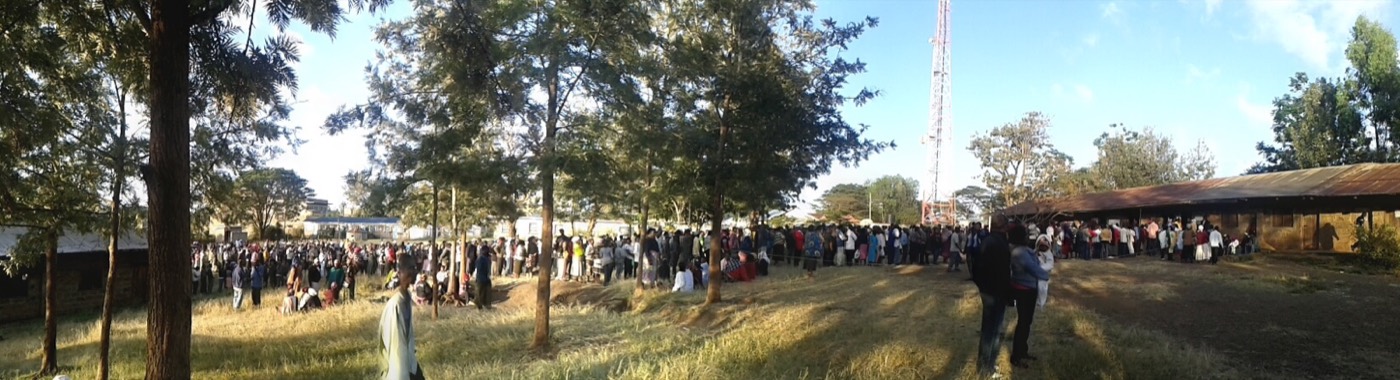
It also means a ward with famously heavy queues can record lower turnout than a quiet ward next door, because queues are a function of how many streams a station has, not of what share of the register showed up. Related: what a long-run turnout decline looks like.
What to check before you quote a turnout figure
Four questions, and they take about a minute.
Which office is this? Which level: station, ward, constituency, county or national? Is the denominator the register for that level, or something else? Is the numerator votes cast or valid votes?
If you cannot answer all four, you do not have a turnout figure. You have a percentage of unknown parentage, and Kenyan election arguments are full of those.
Do one useful thing with this before 10 August 2027. Find the turnout figure for your own ward from the last election, write the four answers beside it, and keep the note somewhere you will find it again. On election night you will be comparing fresh numbers against it under time pressure, and the version of you that wrote the note calmly is far more reliable than the version reading a forwarded screenshot at midnight.
Frequently Asked Questions
How is voter turnout calculated in Kenya?
Turnout is the votes cast in a contest divided by the registered voters entitled to vote in that contest, expressed as a percentage. The denominator is the register for that level, so a ward turnout figure uses the ward register and a presidential figure uses the national register. Votes cast normally includes rejected ballots, because turnout measures attendance rather than valid choices.
Can turnout differ between the six ballots on the same day?
Yes, and it usually does. A voter may be issued six papers and return one unmarked, and rejection rates differ between contests because the ballots are laid out differently and some races have far more candidates. That is why a turnout figure without a named office is incomplete.
Is turnout the same as the share of adults who voted?
No. Turnout is measured against registered voters, not against everyone old enough to register. The share of all eligible adults who voted is a separate and useful measure of civic participation, but quoting it as turnout will make a growing register look like collapsing enthusiasm.