Two Years After the Finance Bill Protests, What Actually Changed?
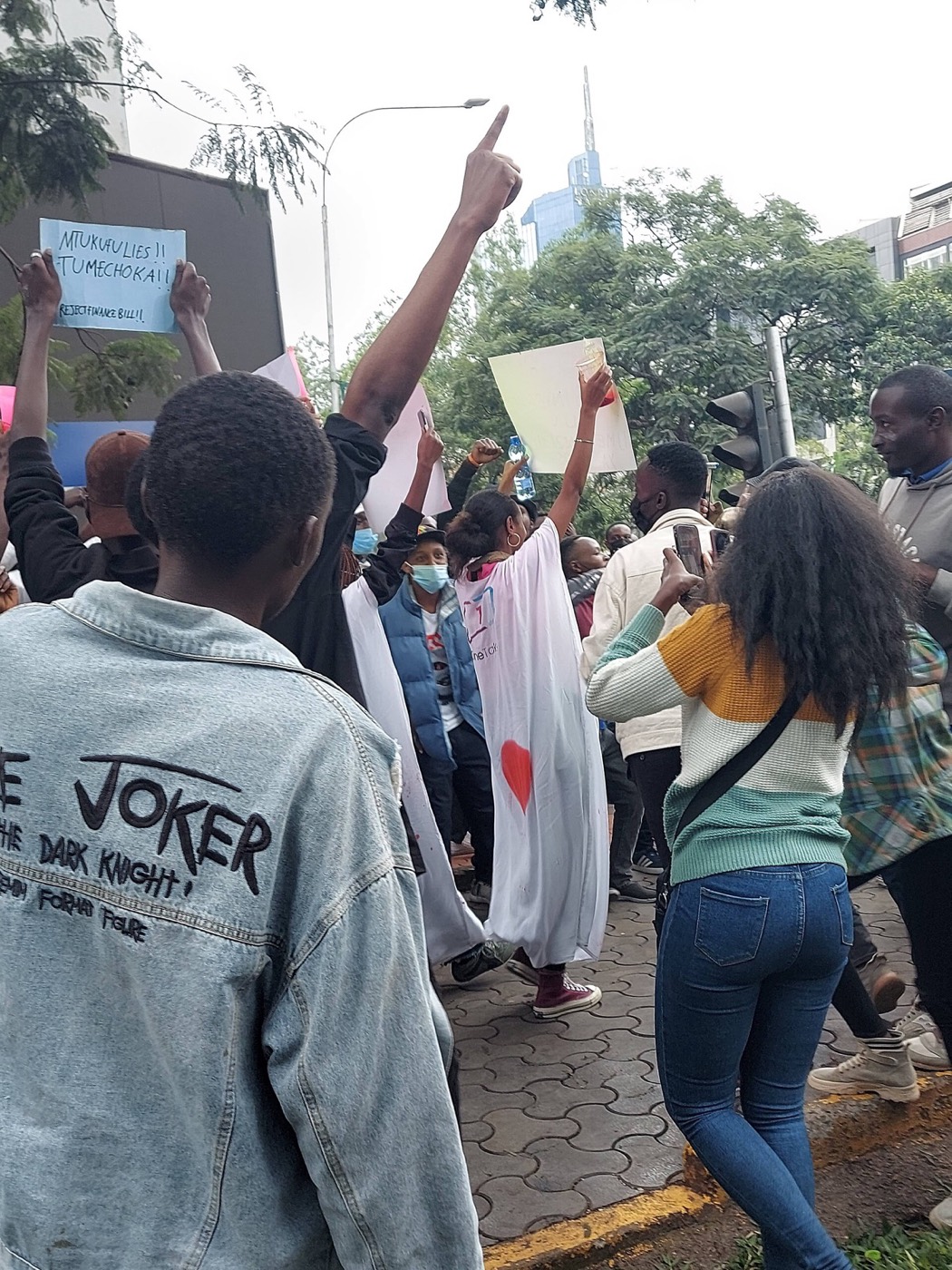
On 25 June 2024, thousands of young Kenyans walked into Nairobi's central business district to stop the Finance Bill 2024. They described themselves as leaderless, partyless and tribeless, which made them unlike anything in modern Kenyan politics.
Two years on, with another Finance Bill just passed, it is worth an honest accounting.
What changed
The bill was withdrawn. That is not a small thing. A mobilisation with no party, no funding and no leadership structure forced the reversal of the central fiscal instrument of a government's year.
Public participation became real. Whatever else is true, subsequent finance bills have visibly been amended in response to submissions. Contested proposals in the 2026 bill were dropped or revised and reliefs on essential goods retained. Nothing forced that except the memory of 2024.
A generation discovered it had leverage. The political class now factors in a constituency that did not previously behave as one.
The vocabulary changed. "Leaderless, partyless, tribeless" entered Kenyan political language as a critique of the entire party system, and it has not left.
What did not change
The fiscal position. Kenya still has significant debt service, a narrow tax base and large recurrent costs. Another Finance Bill has now passed, expected to raise around Sh98.5 billion toward a Sh4.82 trillion budget. The arithmetic that produced 2024 produced 2026.
Accountability for what happened. This is the large unfinished item. Rights groups have documented deaths, injuries and disappearances associated with the protest period, and the question of who was responsible remains substantially unresolved.
The cost of living. Which was the underlying grievance and remains the dominant issue in the 2027 cycle.
The thing the movement could not do
Convert into electoral power.
A leaderless movement is extremely effective at stopping something and structurally incapable of winning an election, because elections require candidates, ballots, party membership, nomination fees, agents at polling streams and a name on a paper.
Every one of those requires exactly the organisation the movement defined itself against.
That is not a criticism. It is a description of a real trade-off, and it explains the gap between the political energy of 2024 and the registration figures of 2026, where voters over 35 have accounted for the large majority of new registrations while 18-to-20-year-olds are the lowest-performing group.
What would convert it
Registration first, and it is unglamorous.
A generation that shut down a capital city cannot be outvoted if it is on the register. It can be, easily, if it is not. Continuous Voter Registration is open, and the initiative that has moved Gen Z numbers most was youth-led and peer-distributed rather than institutional.
For any campaign, movement or candidate reading this, the highest-return activity available in 2026 is helping young people register and recording who did it — because a registered supporter is a vote and an unregistered one is a sentiment.
Related: why Gen Z is still missing from the register.
The thing that changed most, and quietly
Public participation stopped being decorative.
Kenya's Constitution has always required it. Before 2024 it was widely treated as a formality — hearings held, submissions filed, nothing altered.
Since 2024 finance legislation has visibly been amended in response to submissions, with contested proposals dropped and reliefs retained. That is a genuine constitutional practice becoming real, and it happened because a generation demonstrated that ignoring submissions had a cost.
It is also fragile. Practices that exist because of a memory decay as the memory does, and the 2026 bill passed with most of the House absent.
What would make it durable
Not another protest. A habit of participation that does not depend on outrage: submissions filed every year, by organised groups, on the record, whether or not anybody is watching.
That is dull, and it is the difference between a moment and a change.
Frequently Asked Questions
What did Kenya's 2024 Finance Bill protests achieve?
The Finance Bill 2024 was withdrawn, public participation in subsequent finance legislation became visibly consequential, and a young, non-partisan constituency established itself as a political force.
What remains unresolved from the 2024 protests?
Accountability for deaths, injuries and disappearances associated with the protest period, the underlying cost-of-living pressures, and the conversion of protest energy into electoral participation.