What a County Government Actually Does, Function by Function
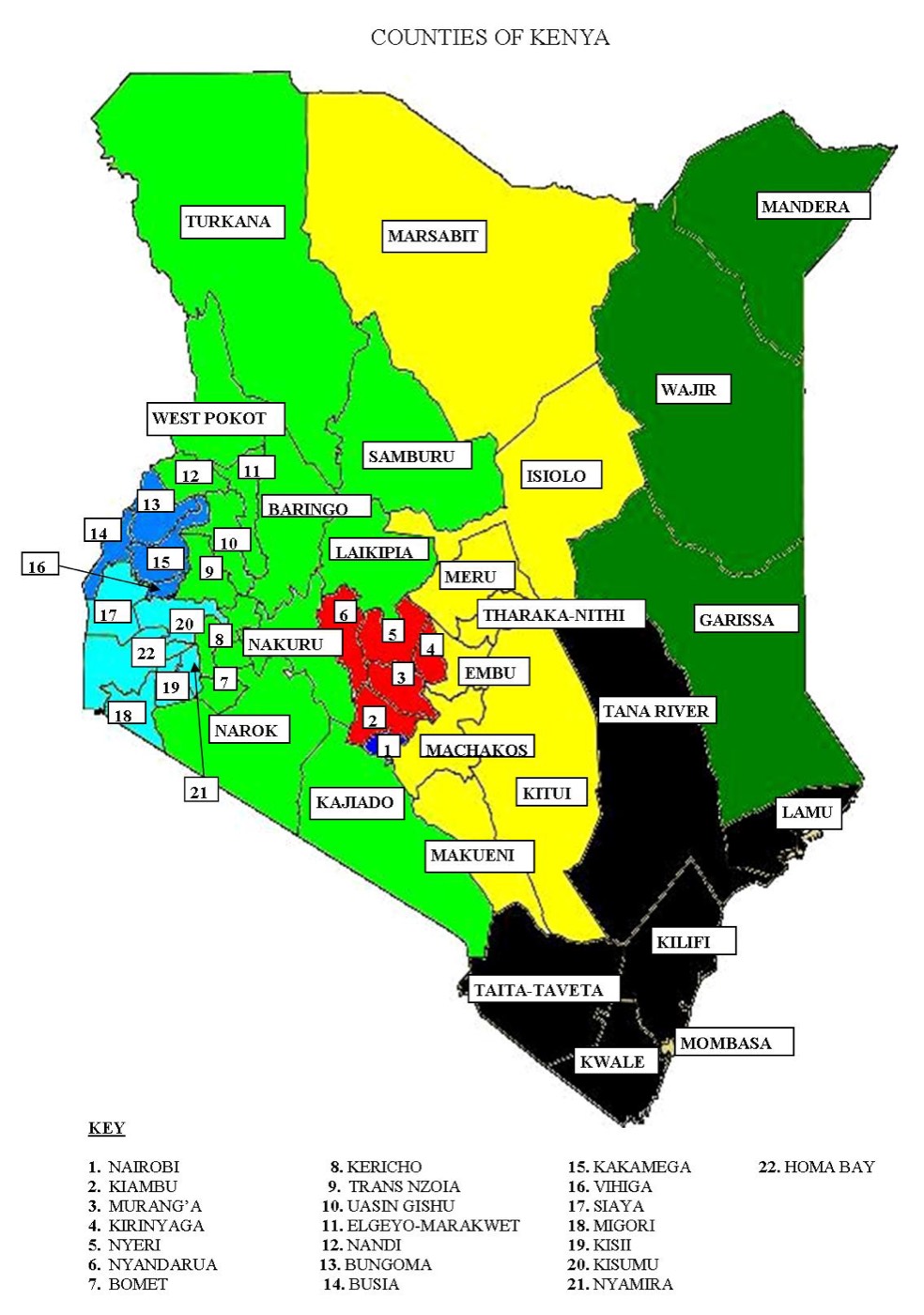
Most complaints Kenyans make about government are aimed at the wrong government.
The dispensary with no drugs. The market with no drainage. The ward road that turns to soup in the long rains. The pre-primary classroom with a dirt floor. Those are county responsibilities. The police post next door, the secondary school up the hill and the trunk road running past both are not.
The split is written down. Chapter Eleven of the Constitution creates county government, the Fourth Schedule divides functions between the national government and the 47 counties, and the County Governments Act 2012 sets out how a county is organised to deliver its half.
Which functions belong to a county
The Fourth Schedule gives counties a defined list. Read in plain language, it covers the following.
Health. County health services: county hospitals, health centres and dispensaries, pharmacies, ambulance services, promotion of primary health care, refuse removal and solid waste disposal, cemeteries and funeral parlours. This is the function residents meet first and judge a county on hardest.
Agriculture. Crop and animal husbandry, livestock sale yards, county abattoirs, plant and animal disease control, and fisheries.
County transport. County roads, street lighting, traffic and parking, public road transport, and ferries and harbours that are not national.
Trade. Markets, trade licensing other than the regulation of professions, fair trading practices, local tourism and cooperative societies. The single business permit is a county instrument, issued under a county law.
Water and sanitation. County water and sanitation services, and stormwater management in built-up areas.
Pre-primary education. Pre-primary education, village polytechnics, homecraft centres and childcare facilities. Primary and secondary schooling stays national.
Planning and development. County planning and development, including statistics, land survey and mapping, boundaries and fencing, housing, and electricity and gas reticulation.
The rest of the list. Cultural activities and public entertainment, public amenities, control of air pollution, noise and public nuisances, outdoor advertising, animal control and welfare, firefighting and disaster management, county public works, and coordinating the participation of communities in governance.
That last one is a function, not a courtesy. A county that does not organise participation is failing a duty, not skipping a nicety.
Who does what inside a county government
Two arms, and they are not the same thing.
The executive is the Governor, the Deputy Governor and the County Executive Committee. The Governor appoints executive committee members and the County Assembly vets and approves them. Each runs a department. Below them, chief officers are the accounting officers who authorise spending, and the County Public Service Board handles hiring.
The legislature is the County Assembly: an elected MCA for each of the 1,450 wards, plus nominated members. It makes county law, approves the budget, approves plans, vets appointments and oversees the executive. What that looks like day to day is in the assembly's working year.
What a county cannot do, and who to ask instead
Policing, national security, immigration, courts, defence, foreign affairs, universities, primary and secondary education, national trunk roads and national statistics are national functions. A Governor cannot deploy police. An MCA cannot post a teacher.
Counties also cannot invent taxes. Article 209 lets a county impose property rates, entertainment taxes, any other tax authorised by an Act of Parliament, and charges for the services it provides. Nothing beyond that. What that leaves is set out in the money a county raises for itself.
How to check what your county is actually responsible for
Three documents, all public.
The county's departmental structure tells you which office owns a problem. The County Integrated Development Plan tells you what the county has committed to do about it over five years. The current appropriation act tells you what was funded this year.
Ask the department first, in writing, and keep the acknowledgement. If the department does not answer, the assembly committee that shadows it is the next stop, and an MCA can raise the matter as a question or a statement on the floor of the assembly.
Why the split matters before 10 August 2027
Campaign season produces promises that belong to the wrong government.
A candidate for MCA promising more police officers is promising something no county organ controls. A candidate for Governor promising to rebuild a national highway is promising something the county cannot fund. Both are common, and both are checkable against a single page of the Fourth Schedule.
Test every promise you hear against the list above. If the function is not a county function, the promise has no delivery route, and asking which department will implement it usually ends the conversation.
Start with your own ward. Name the three services you use most, find out which department owns each one, and write down who its chief officer is. That single page is the whole basis for holding a county to account.
Frequently Asked Questions
Is health a county function or a national function in Kenya?
County health services are devolved under the Fourth Schedule of the Constitution. That covers county hospitals, health centres, dispensaries, pharmacies, ambulance services and primary health care promotion, along with refuse removal and solid waste disposal. National health policy, national referral facilities and the standards that apply across the country remain national functions.
Can a county government create its own taxes?
No. Article 209 of the Constitution limits counties to property rates, entertainment taxes and any other tax specifically authorised by an Act of Parliament. Counties may also impose charges for services they provide, which is where most county revenue comes from in practice. Anything charged outside a county finance act is not a lawful fee.
Who runs primary and secondary schools, the county or the national government?
The national government. Counties are responsible for pre-primary education, village polytechnics, homecraft centres and childcare facilities. Primary and secondary schooling, teacher deployment and the national curriculum sit with the national government, which is why a county cannot post a teacher or build a national school on its own budget line.