Agent Deployment on the Platform: Assign, Confirm, and Watch the Gaps Close
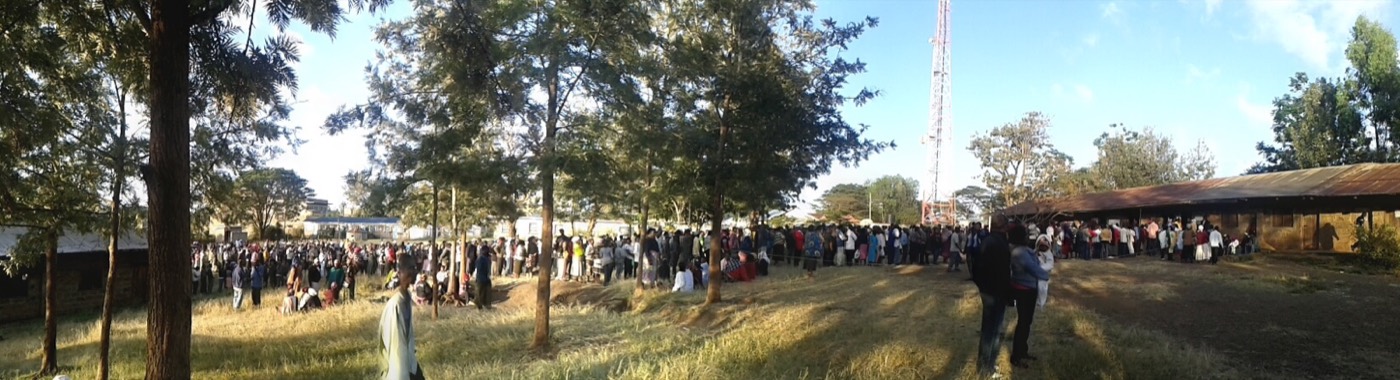
An agent assignment is one row: one named person, one polling station, one election.
That is the whole primitive, and almost everything useful about agent coverage follows from having it. You can count the rows. You can count the stations with no row against them. You can sort by ward and see which coordinator is behind. None of that is possible when the deployment plan is a promise in a meeting.
Building the list before you build the roster
Start from the geography, not from the people.
Open your ward and pull the polling centres, then the stations inside each centre. That list is fixed by the IEBC, it is knowable in 2026, and it is the denominator for everything that follows. A campaign that recruits against a guessed number is either wasting money or short on the day, and it usually will not know which.
Then assign. An assignment names a specific person for a specific station, with a phone number, for this election cycle. Not "we have twenty people in Kisauni", which is a sentence rather than a plan.
Related: the archive makes the case for doing this early in can you name an agent for every polling stream in your ward.
Reading the coverage figure honestly
Coverage is a ratio: how many stations have an assigned agent, out of how many stations exist.
The platform tracks that per station and rolls it up by ward, constituency and county, so a candidate can open one screen and see which wards are complete and which are hollow. The number updates as assignments are made rather than being recalculated by somebody on a Friday.
Read the denominator, not the percentage. A ward showing high coverage over a station list that is missing three centres is not covered, it is mismeasured, which is why the geography check in walking Kenya's geography comes before the roster.
Assigned is not the same as confirmed
This is the distinction that separates a real deployment from a spreadsheet.
A name typed into a row is a plan. A person who has been contacted, has agreed, knows which station they are going to, and has been told what time to arrive is a deployment. The gap between those two states is where election-morning failures live, and it is invisible unless the system makes you record it.
So treat the assignment list as a call list. Work through it. Every person who confirms is a station you no longer have to worry about. Every person who does not answer twice is a station you now have months to re-staff rather than hours.
What the deployment does on the day
On 10 August 2027 the assignment is what makes the rest of the platform work.
An agent signs in and sees the station they are assigned to, not a list of every station in the county. When they submit the result forms at the end of the count, the submission arrives already attached to that station, because the assignment said so. Nobody has to type a station code on a phone in a badly lit hall at midnight, and nobody has to work out afterwards which of four similar centre names was meant.
The submission then goes into verification, which is a separate job with a separate purpose, described in why the second record is the point.
Do this in 2026, not in 2027
Three steps, in this order.
Pull the full station list for every ward you intend to contest and write down the total. That number is your recruitment target and it will be larger than the one in your head, because centres hold multiple stations.
Then assign whoever you already have, honestly, leaving the gaps visible. A coverage screen full of holes is uncomfortable and useful. A coverage screen padded with names of people nobody has called is comfortable and worthless.
Then work the gaps ward by ward with your coordinators, and re-check the figure monthly. Agents drop out, move, take jobs and change their minds over twelve months. The list you build once and never revisit is not a list of agents, it is a list of people who were once willing.
Frequently Asked Questions
How many polling agents does a campaign need?
One per polling station at minimum, and stations are the unit rather than centres, since one centre commonly contains several stations. The correct answer for your seat comes from counting the stations in the wards you are contesting, which you can do from the geography explorer. Most campaigns discover the real figure is well above their working assumption.
What does the platform do that a spreadsheet of agents does not?
It knows the full list of stations, so it can tell you which ones have nobody assigned rather than only listing the people you have. It also carries the assignment through to election day, so a submitted result form arrives already attached to the right station. A spreadsheet can hold names but cannot compute the gap or connect to anything downstream.
Can agents be shared between candidates on the same ticket?
That is the intended arrangement. An agent sitting in a stream watches all six counts and can record all six forms, so a ticket that recruits six separate sets of agents is paying several times for one chair. Party administrators can see coverage across the candidates carrying the party's ticket for exactly this reason.